smart petdel development is the process of building machine learning systems that can recognize, predict, or respond to pet behaviors, health signals, and physical characteristics. It combines computer vision, sensor data processing, and behavioral analysis to power products such as smart pet cameras, activity trackers, and AI-assisted veterinary diagnostics. This guide covers the core data requirements, step-by-step training pipeline, and practical trade-offs involved in creating reliable pet AI models.
What Is Pet AI Model Development?
Pet AI model development refers to the end-to-end engineering process of designing, training, evaluating, and deploying machine learning models that operate on pet-related data. Unlike general-purpose AI systems, pet AI models must account for high intra-species variability—different breeds, body shapes, coat patterns, and behavioral quirks—which makes them a distinct and challenging subfield of applied AI.
The field spans several technical subdomains:
- Computer vision for pets: Breed classification, object detection (finding a pet in a frame), pose estimation, and activity recognition from images or video.
- Audio analysis: Detecting barks, meows, growls, or purrs and classifying their emotional or physiological context.
- Sensor-based behavior modeling:smart collarerometer, GPS, or gyroscope data from smart collars to infer sleeping, eating, scratching, or restlessness.
- Multimodal health AI: Combining visual, audio, and sensor inputs to flag early signs of illness, lameness, or anxiety.
Industry adoption is accelerating. The global smart pet products market was valued at roughly USD 5.8 billion in 2023 and is projected to grow at a compound annual growth rate (CAGR) of about 17% through 2030. Pet AI solutions such as those developed by Pettuex are increasingly integrated into consumer wearables, smart feeders, and telemedicine platforms, making model quality a direct driver of product trust and clinical usefulness.
Key Data Requirements for Pet AI Models
Data is the single most important determinant of pet AI model performance. A well-architected model trained on poor data will consistently underperform a simpler model trained on clean, representative, well-labeled data. Below are the concrete data requirements by modality.
Image and Video Data
For visual pet AI tasks, data volume and labeling quality are both critical. As a rule of thumb:
- Breed classification: At least 1,000–2,000 labeled images per breed when fine-tuning a pre-trained convolutional neural network (CNN). For rare breeds with fewer publicly available images, a minimum of 300–500 images per class can still yield acceptable results if strong data augmentation is applied.
- Object detection (finding a pet in an image or video): 1,500–3,000 annotated bounding boxes per target class. Each annotation must include a tight bounding box and a class label (e.g., "dog," "cat," "bird").
- Pose estimation: 5,000–10,000 keypoint-annotated images for reliable joint tracking (e.g., shoulders, elbows, hips) across different breeds and camera angles.
Publicly available benchmark datasets provide a useful starting point:
- Stanford Dogs Dataset: 20,580 images across 120 dog breeds.
- Oxford-IIIT Pet Dataset: 7,349 images across 37 categories (cats and dogs).
- COCO and OpenImages: Include pet categories but are less breed-specific.
Behavioral and Sensor Data
Wearable-based pet AI models rely on time-series data from accelerometers, gyroscopes, and sometimes heart-rate monitors. Recommended specifications:
- Sampling rate: 20–50 Hz for activity recognition; lower rates miss rapid movements like scratching or shaking.
- Labeling granularity: Behavior labels should be timestamped with start and end times, ideally validated by video review. Common behavior classes include sleep, rest, walk, run, eat, drink, scratch, shake, and vocalize.
- Minimum duration: At least 500 hours of labeled sensor data for a robust multi-class behavior classifier. In practice, most commercial models use 1,000+ hours across varied environments.
Audio Data
For bark detection or vocalization analysis, audio datasets should capture:
- Multiple recording distances (close-range and ambient room audio).
- Background noise variety: TV, traffic, other animals, household appliances.
- Class balance: At least 1,000 samples per vocalization type (e.g., alert bark, play bark, whine, growl).
Audio models typically use mel-spectrogram features fed into a CNN or a transformer. Pre-trained audio models such as YAMNet can be fine-tuned on as few as 500 labeled samples per class with acceptable accuracy.
Step-by-Step Process for Building a Pet AI Model
Follow this structured pipeline to move from raw data to a production-ready pet AI model. The exact steps will vary by use case, but the sequence below reflects the industry-standard workflow.
Step 1: Define the Problem and Success Metrics
Before collecting any data, specify exactly what the model must predict and how performance will be measured. For example:
- Task: Detect if a dog is licking a wound in a video stream.
- Metric: Frame-level F1 score, with precision prioritized over recall to minimize false alerts.
- Constraint: Model must run in real time on a low-power edge device (e.g., a smart camera with a 1–2 TOPS NPU).
Choosing the right metric matters. Accuracy alone is misleading when classes are imbalanced (e.g., a model that predicts "not licking" 95% of the time can be 95% accurate but completely useless). Use precision, recall, and F1 score instead.
Step 2: Collect and Clean Data
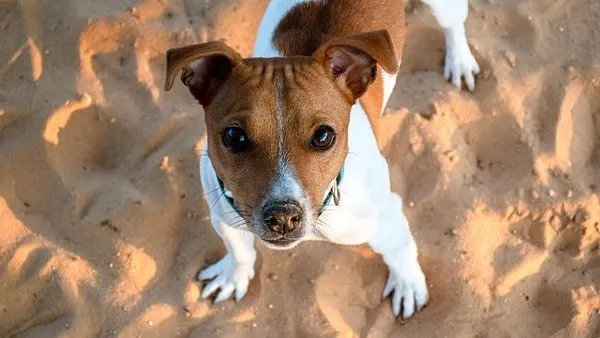
Data collection should come from the actual deployment environment whenever possible. A model trained only on studio-quality photos will degrade when deployed in a dimly lit living room. Key collection practices:
- Capture data across varied lighting conditions, camera angles, room layouts, and pet coat colors.
- Include both purebred and mixed-breed subjects to reduce breed bias.
- Collect video rather than still images for temporal models; single frames can be extracted later for image datasets.
- Remove duplicates, blurry frames, and mislabeled samples during the cleaning phase.
Step 3: Annotate with Expert Input
Annotation quality directly determines model ceiling. For pet behavior, a veterinary behaviorist or certified trainer should review label definitions and spot-check annotations. For image tasks, use a labeling tool such as Label Studio, CVAT, or Roboflow. Recommended annotation guidelines:
- For detection: use tight bounding boxes; do not include background in the box.
- For classification: define exclusive, mutually clear classes to avoid ambiguity (e.g., "walking" vs. "running" should have a speed or gait criterion).
- For behavior: use video clips of 5–10 seconds, and have two annotators independently label each clip; measure inter-annotator agreement (Cohen's kappa ≥ 0.8 is a good target).
Step 4: Choose a Base Architecture
Unless you have a massive proprietary dataset (millions of images), always start with transfer learning rather than training from scratch. Pre-trained backbones reduce training time by up to 90% and require far fewer labeled samples. Common choices:
- MobileNetV3 or EfficientNet-Lite: Best for edge deployment; small footprint (2–10 MB) with decent accuracy.
- ResNet-50 or EfficientNet-B4: Better accuracy at the cost of size; suitable for cloud or server-side inference.
- YOLOv8 or YOLOv9: Industry-standard for real-time object detection; supports efficient deployment on NVIDIA Jetson and other edge hardware.
- Transformers (ViT, Swin): Require more data and compute but can outperform CNNs on fine-grained breed classification when enough data is available.
Step 5: Train and Validate
Training a pet AI model involves several key hyperparameter decisions:
- Learning rate: Start with a low learning rate (1e-4 to 1e-5) when fine-tuning pre-trained weights.
- Batch size: 16–64 depending on GPU memory; smaller batches act as a regularizer.
- Epochs: Stop training when validation loss plateaus (typically 20–50 epochs for transfer learning). Use early stopping with a patience of 5–10 epochs.
- Data augmentation: Apply random horizontal flips, rotation (±15°), brightness/contrast jitter, and random cropping to increase robustness.
Split your data into training (70%), validation (15%), and test (15%) sets. Crucially, the test set must come from a different distribution than the training set—for example, different households or different camera hardware—to accurately estimate real-world performance.
Step 6: Deploy and Monitor
Deployment choices depend on latency, privacy, and hardware constraints:
- Edge deployment: Convert the model to TensorFlow Lite, ONNX, or Core ML. Quantize weights to INT8 to reduce size by 4× with minimal accuracy loss.
- Cloud deployment: Use TensorFlow Serving, TorchServe, or a serverless function. Cloud is appropriate when the model requires large inputs (e.g., full-resolution video) or frequent retraining.
- Hybrid approach: Run lightweight filtering on-device (e.g., detect a pet is present) and send only relevant clips to the cloud for detailed analysis.
After deployment, monitor distribution drift. If the model was trained on indoor camera data and users start using it outdoors, accuracy will drop. Set up a feedback loop that collects anonymized edge cases and periodically retrains the model—monthly retraining is a common cadence for consumer pet products.
Comparing AI Model Approaches for Pet Applications
Different pet AI use cases call for different model families. Below is a comparison of the main approaches, their strengths, and their limitations.
Image Classification vs. Object Detection
Image classification answers the question "What is in this image?" (e.g., is this a cat or a dog?). It is fast, lightweight, and easy to train, but it cannot localize the pet within the frame. Object detection localizes and classifies simultaneously, which is essential for smart cameras that must track a pet's position. Detection models are slower and require box-level annotations, but they provide dramatically more useful outputs for real-world products.
Classical CNNs vs. Vision Transformers
Classical CNNs (ResNet, MobileNet) remain the pragmatic default for pet AI. They are well-understood, easy to deploy, and efficient on edge hardware. Vision transformers (ViT, Swin) can achieve higher accuracy on fine-grained tasks like breed identification, but they require significantly more training data and compute. For most pet AI products, a fine-tuned CNN offers the best accuracy-to-cost trade-off.
Generative AI vs. Predictive AI
Predictive AI models (classifiers, detectors, regressors) are the backbone of pet AI—they make decisions or predictions from observed data. Generative AI models (GANs, diffusion models) are increasingly used to create synthetic training data—for example, generating diverse images of a rare breed to balance an otherwise skewed dataset. Generative models are not a replacement for real data, but they are a powerful augmentation tool when certain classes are underrepresented.
Single-Stage vs. Two-Stage Detectors
YOLO (single-stage) and Faster R-CNN (two-stage) are the most common detection architectures. YOLO is faster and simpler, making it the default choice for real-time pet tracking on edge devices. Faster R-CNN is more accurate on small or dense objects but is 3–5× slower, which limits its use in latency-sensitive applications.
Practical Tips and Common Pitfalls in Pet AI Model Development
Even experienced engineers encounter recurring pitfalls when building pet AI models. Here are the most common ones and how to avoid them.
Pitfall 1: Breed and Size Bias
Most public pet datasets are dominated by a handful of popular breeds (Labrador Retrievers, Persian cats, etc.). A model trained on such data will perform poorly on mixed breeds or rare breeds. Solution: Oversample underrepresented breeds, use synthetic augmentation, and validate model performance separately for rare vs. common breeds.
Pitfall 2: Ignoring Lighting and Camera Variance
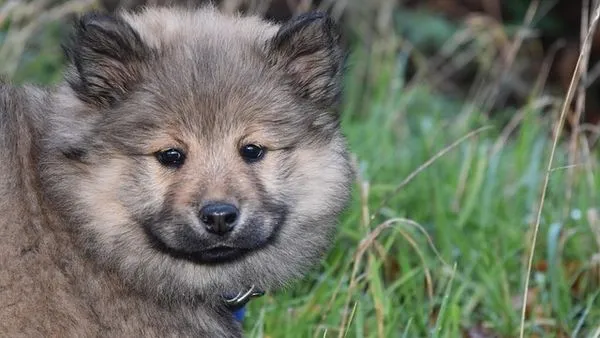
A model trained on well-lit daytime images will fail on night-vision or low-light footage. Solution: Collect data across all lighting conditions the product will encounter. Add noise, blur, and exposure augmentation during training.
Pitfall 3: Overfitting to the Household Environment
If training data comes from a single household or a single camera brand, the model may learn background features instead of pet features. Solution: Use data from multiple households, multiple room layouts, and multiple camera models. Evaluate on a held-out set of completely unseen environments.
Pitfall 4: Neglecting Class Imbalance in Behavior Data
In behavior datasets, "sleeping" often accounts for 70%+ of the data, while rare but important behaviors like "scratching" or "vomiting" are underrepresented. Solution: Use weighted loss functions, focal loss, or oversampling of rare classes. Consider framing rare behaviors as anomaly detection rather than classification.
Pitfall 5: Treating Edge Deployment as an Afterthought
Many teams build a large, accurate model and then struggle to deploy it on a smart camera with 1 GB of RAM. Solution: Set hardware constraints at the start. Choose a model family that fits the target device, and build quantization-aware training into the pipeline from day one.
Conclusion
pet healthel development is a multi-disciplinary effort that demands careful data strategy, a sound transfer-learning pipeline, and a clear-eyed view of real-world deployment constraints. Success depends less on choosing the newest architecture and more on getting the fundamentals right: high-quality labeled data, appropriate metrics, and rigorous validation across diverse environments. As the pet technology market continues to expand, developers who master these fundamentals—and leverage mature AI infrastructure from industry leaders like Pettuex—will be best positioned to build products that genuinely improve pet health and human-animal companionship.
Frequently Asked Questions
How much data is needed to start pet AI model development?
For a fine-grained breed classification task, start with at least 1,000 labeled images per breed. For behavior classification from sensor data, plan for 500+ hours of labeled time-series data. If you are using transfer learning, you can start with a smaller dataset (300–500 images per class) to build a prototype, but production-grade accuracy will require substantially more data.
What is the best model architecture for pet recognition?
For edge devices, MobileNetV3 or EfficientNet-Lite with fine-tuned weights offers the best balance of size and accuracy. For cloud-based systems where compute is less constrained, ResNet-50 or a vision transformer can deliver higher accuracy. For real-time object detection, YOLOv8 is the current industry standard.
Can I use transfer learning for pet AI models?
Yes, and you should. Transfer learning from pre-trained backbones (e.g., ImageNet weights) reduces training time by up to 90% and reduces the amount of labeled data needed by 5–10×. Fine-tune the entire network with a low learning rate rather than freezing all layers, as pet visual features differ significantly from typical ImageNet classes.
How do I handle mislabeled behavior data?
First, use two independent annotators per sample and compute inter-annotator agreement. Second, build a "review queue" that flags samples where annotators disagree. Third, periodically audit a random 5% of the training set with a domain expert (e.g., a veterinarian). If mislabeling persists, consider using a noise-robust loss function such as label smoothing or symmetric cross-entropy.
What is the typical cost of developing a pet AI model?
For a small-scale proof of concept, costs can range from USD 5,000 to 20,000, primarily for data annotation and cloud compute. A production-grade model with 5,000+ annotated images, expert behavior labels, and edge deployment typically costs USD 50,000 to 150,000. The largest cost driver is always data labeling, not model training.