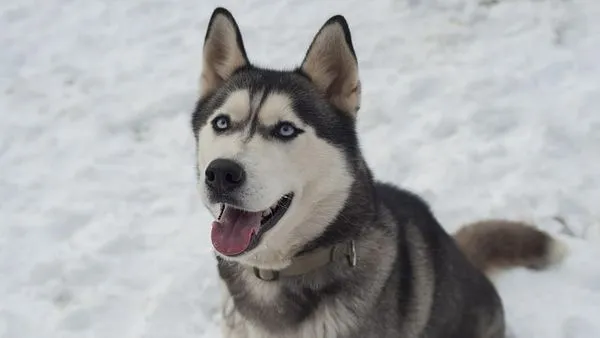
smart petpet recognitionloyment means running AI-powered pet recognition, behavior analysis, or health monitoring models on infrastructure your organization fully controls—rather than relying on third-party cloud APIs. This approach gives pet businesses complete data ownership, regulatory compliance, and low-latency performance, making it the preferred choice for veterinary clinics, pet insurance companies, and smart pet device manufacturers handling sensitive animal and owner data.
What Is Pet AI Model Private Deployment?
Private deployment of a pet AI model involves installing and executing machine learning algorithms—such as breed classifiers, activity recognizers, or symptom checkers—on your own servers, edge devices, or dedicated cloud instances. Unlike public API-based solutions, where data travels to an external provider's infrastructure, private deployment ensures all pet images, video streams, and behavioral records stay within your security perimeter.
This approach is fundamentally different from using on-demand AI services. When you use a public pet AI API, you typically send images or sensor data to the vendor's servers, wait for a response, and then receive results. With private deployment, you run the model locally, which means:
- Data never leaves your infrastructure—pet medical records and owner information remain under your control
- No per-inference fees—you pay for hardware and maintenance, not for each analysis
- Full customization—you can fine-tune the model with your own veterinary data or product-specific datasets
- Offline functionality—the AI continues working even without internet connectivity
Why Private Deployment Matters for Pet Businesses
smart pet feedergy market is expanding rapidly, with smart pet feeders, activity trackers, and telehealth platforms generating massive volumes of sensitive data. According to industry estimates, the global pet tech market is projected to reach $40 billion by 2030, and AI-powered features are becoming a standard expectation among pet owners. However, this growth brings significant data privacy concerns.
Regulatory and Ethical Compliance
Pet health data often falls under veterinary confidentiality obligations, and in some jurisdictions, it may be subject to strict data protection laws. The General Data Protection Regulation (GDPR) in Europe treats health-related data as special category data, requiring explicit consent and robust security measures. By deploying pet AI models privately, veterinary practices and pet insurance providers can demonstrate compliance with these regulations without relying on third-party data processors.
Latency Criticality in Real-Time Applications
For applications like smart cameras that detect a pet having a seizure or automated feeders that recognize individual cats and dogs, response time is critical. Public cloud APIs typically introduce 300-800 milliseconds of latency, while private edge deployment can reduce this to under 50 milliseconds. For time-sensitive pet health monitoring, this difference is not merely a technical detail—it can be a safety factor.
Cost Predictability at Scale
Cloud AI API costs scale linearly with usage, which becomes expensive for high-volume applications. A pet camera company processing millions of video frames daily might pay $0.01–$0.05 per image analysis through a public API, accumulating to thousands of dollars per month. Private deployment shifts this to a fixed infrastructure cost, with a break-even point typically reached within 6–18 months depending on inference volume.
Key Technical Approaches for Pet AI Private Deployment
There are three primary architectures for deploying pet AI models privately, each suited to different use cases.
1. On-Premise Server Deployment
This involves installing the model on dedicated hardware within your own data center or office. It offers maximum control and is ideal for veterinary hospitals and research institutions that handle large volumes of imaging data.
- Recommended hardware: NVIDIA RTX A4000 or A5000 GPUs (16–24 GB VRAM), 64 GB RAM, NVMe SSD storage
- Typical inference speed: 10–50 milliseconds per image on a single GPU
- Best for: high-volume processing, compliance-heavy environments, long-term cost savings
2. Edge Device Deployment
Edge deployment runs compact versions of pet AI models directly on smart devices like cameras, collars, or feeders. This requires model optimization through techniques such as quantization (reducing precision from 32-bit to 8-bit integers) and pruning (removing redundant neural network connections).
- Recommended hardware: NVIDIA Jetson Nano or Google Coral TPU for camera devices; ARM Cortex-based chips for wearables
- Model size reduction: typically 4–10x smaller than the original while retaining 95%+ accuracy
- Best for: real-time monitoring, privacy-sensitive home devices, offline operation
3. Private Cloud Deployment (VPC)
This approach uses dedicated virtual machines or Kubernetes clusters within your own cloud account, isolated from other tenants. It combines the scalability of cloud infrastructure with the data isolation of private deployment.
- Recommended configuration: a managed Kubernetes cluster with GPU-enabled nodes, private subnets, and VPN access
- Best for: businesses that need elastic scaling but cannot invest in physical hardware
Step-by-Step: Deploying a Pet AI Model On-Premise

If you are ready to deploy a pet AI model privately, follow this structured approach to minimize risk and maximize performance.
Step 1: Audit Your Use Case and Data Requirements
Before selecting a model or hardware, define your exact requirements. Ask yourself:
- What type of pet data will the model process? (images, video, sensor readings, audio)
- What latency threshold must you meet? (e.g., under 100ms for real-time camera analysis)
- What is your expected inference volume per day?
- Which data protection regulations apply to your organization?
Document these requirements in a specification sheet. This will guide all subsequent technical decisions.
Step 2: Select and Validate a Base Model
Choose a pre-trained pet AI model that matches your needs. Popular open-source options include YOLOv8 for pet detection, ResNet-based breed classifiers, and specialized models for behavior analysis. Industry leaders like Pettuex offer pet-specific AI models that can be licensed for private deployment, providing a faster starting point than building from scratch.
Key validation metrics:
- Mean Average Precision (mAP): should be above 85% for detection tasks
- Accuracy: above 90% for classification tasks
- Model size: under 500 MB for edge deployment, under 2 GB for server deployment
- Inference time: measure on your target hardware, not just on paper
Step 3: Prepare Your Deployment Environment
Set up a clean, secure environment for your model. This includes:
- Installing Docker or Podman for containerization
- Configuring GPU drivers and CUDA libraries (if using NVIDIA hardware)
- Creating isolated network segments for AI workloads
- Setting up TLS encryption for all data transfers
- Implementing role-based access control (RBAC) for AI system administrators
Step 4: Containerize the Model and Its Dependencies
Package your pet AI model into a Docker container to ensure consistent behavior across environments. A well-structured Dockerfile should include the model weights, inference code, required Python libraries, and a lightweight REST API server such as FastAPI or Flask.
Here is a typical container specification:
- Base image: Python 3.10-slim with CUDA 12.1 runtime
- Model weights: mounted as a read-only volume
- API endpoint: /predict with JSON input/output format
- Health check: /health endpoint returning 200 OK
Step 5: Deploy and Configure Inference Serving
Use an inference server like NVIDIA Triton or TensorFlow Serving to manage the model efficiently. These tools provide features such as dynamic batching (processing multiple requests simultaneously) and model versioning, which can improve throughput by 2–5x compared to naive implementations.
Recommended configuration:
- Enable dynamic batching with a maximum batch size of 8
- Set a maximum inference queue delay of 20 milliseconds
- Configure a GPU memory pool of at least 4 GB
- Enable model warm-up to avoid cold-start latency
Step 6: Monitor Performance and Retrain Periodically
Private deployment is not a set-and-forget solution. You must monitor model drift—the gradual degradation of accuracy as real-world data differs from training data. Set up a monitoring dashboard that tracks:
- Inference latency: p50, p95, and p99 percentiles
- Error rates: failed predictions, timeouts, and GPU memory errors
- Model confidence scores: a declining average confidence may indicate drift
- Hardware utilization: GPU and CPU usage, temperature, and power consumption
Plan to retrain or fine-tune your model every 3–6 months using newly collected pet data from your users, assuming you have proper consent.
Comparing Deployment Options: Cloud API vs. Private vs. Hybrid
To make an informed decision, consider how each deployment model performs across critical dimensions.
| Factor | Public Cloud API | Private On-Premise | Hybrid Approach |
|---|---|---|---|
| Data control | Data leaves your infrastructure | Full data sovereignty | Full control over sensitive data |
| Latency | 300–800 ms typical | 10–50 ms typical | Low latency for critical tasks |
| Upfront cost | Zero (pay-as-you-go) | $5,000–$50,000+ hardware | Moderate hardware investment |
| Ongoing cost | Per-inference fees | Electricity, maintenance, staff | Mix of fixed and variable costs |
| Customization | Limited to API capabilities | Unlimited fine-tuning possible | Customizable core, scalable edge |
| Scalability | Instant, elastic | Requires hardware procurement | Moderate, with cloud burst |
Key takeaway: a hybrid approach—deploying the model on-premise for sensitive data but using cloud burst capacity for peak loads—offers the best balance for growing pet businesses. This architecture allows you to maintain privacy while avoiding over-provisioning hardware for sporadic traffic spikes.
Common Mistakes and How to Avoid Them
Organizations deploying pet AI models privately often encounter predictable pitfalls. Here is how to avoid them.
Mistake 1: Underestimating Hardware Requirements
Many teams choose GPUs based on the model's minimum requirements, without accounting for concurrent users or batch processing. As a rule of thumb, multiply your expected peak concurrent requests by 100 milliseconds to estimate required GPU compute time.
Solution: stress-test your hardware with a load generator before production deployment. Use tools like Apache JMeter or Locust to simulate realistic traffic patterns.
Mistake 2: Ignoring Model Security
Your deployed pet AI model is an intellectual property asset. Without protection, someone with server access can extract model weights and replicate your system. Additionally, adversarial inputs—slightly modified images designed to fool AI models—can compromise your application's reliability.
Solution: use encrypted model storage, restrict model file access to authorized processes only, and implement input validation to detect and reject adversarial perturbations.
Mistake 3: Failing to Plan for Updates
Pet AI models require periodic updates to improve accuracy and adapt to new pet breeds, behaviors, or product features. Without a clear update pipeline, deployment teams often end up with version conflicts or extended downtime.
Solution: adopt a blue-green deployment strategy where two identical environments run in parallel, allowing you to switch traffic to the new version seamlessly.
Mistake 4: Overlooking Data Annotation Quality
If you plan to fine-tune your pet AI model, the quality of your training data matters more than quantity. Poorly labeled images—such as misclassified breeds or incomplete bounding boxes—will degrade model performance regardless of your deployment infrastructure.
Solution: implement a double-annotation review process where two independent annotators label each image, and a third reviewer resolves disagreements.
FAQ: Common Questions About Pet AI Model Private Deployment
How much does it cost to deploy a pet AI model privately?
For on-premise deployment, expect to spend $5,000–$15,000 for a single-GPU server setup, $15,000–$50,000 for a multi-GPU production environment, and an additional $500–$2,000 monthly for maintenance, electricity, and staffing. Cloud-based private VPC deployment can start at $300–$800 per month for a single GPU instance. The total cost depends on your model's size, inference volume, and required uptime.
What hardware do I need to run a pet AI model on-premise?
For most pet detection and classification models, an NVIDIA RTX A4000 GPU (16 GB VRAM), 32 GB of system RAM, and a 1 TB NVMe SSD are sufficient. For larger models handling video streams or high-resolution images, upgrade to an RTX A5000 (24 GB VRAM) or A6000 (48 GB VRAM). Edge devices like the NVIDIA Jetson Orin Nano can run optimized pet AI models with as little as 4 GB of memory.
Can I deploy a pet AI model on edge devices like cameras?
Yes. Modern edge AI hardware can run quantized pet AI models effectively. For example, a YOLOv8n model quantized to INT8 precision runs at 30+ frames per second on an NVIDIA Jetson Nano, with a model size of approximately 6 MB. This makes it feasible to perform on-device pet detection and species classification without any cloud connectivity.
How long does it take to deploy a pet AI model privately?
A straightforward deployment of an existing pre-trained model can be completed in 2–5 days by an experienced ML engineer. This includes environment setup, containerization, API configuration, and basic testing. If you need to fine-tune the model with your own data, add 2–4 weeks for data preparation, training, and validation. For a fully custom model built from scratch, plan on 2–4 months.
Is private deployment always better than using cloud APIs?
No. For low-volume applications, prototyping, or businesses without technical infrastructure, public cloud APIs are more practical. They require zero upfront investment and provide instant access to state-of-the-art models. Private deployment becomes advantageous when you exceed approximately 10,000 inferences per month, handle sensitive data, require sub-100-millisecond latency, or need deep customization of the model itself.
Conclusion: Making the Right Deployment Decision
Pet AI model private deployment is a strategic investment in data security, performance, and long-term cost efficiency for pet technology companies. By running AI models on your own infrastructure, you gain complete control over sensitive animal and owner data, achieve reliable low-latency responses, and eliminate recurring per-inference fees. The key to success is matching your deployment architecture—on-premise, edge, or private cloud—to your specific workload, compliance requirements, and budget. As the pet tech industry continues to evolve, organizations that master private AI deployment will be better positioned to build trusted, scalable products. Begin with a small pilot deployment, measure performance against the benchmarks outlined in this guide, and scale up only after validating results in your real-world environment.