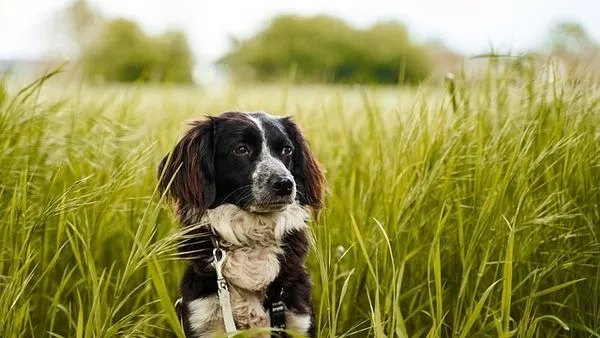
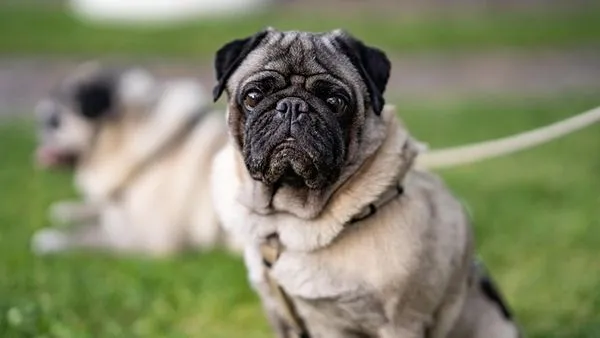
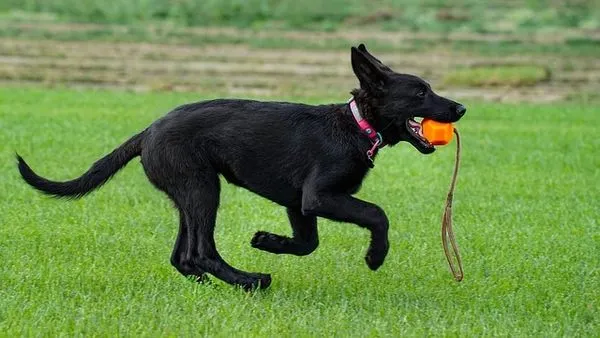
smart petdel inference is the process of running a trained artificial intelligence model on new data from pets—such as images, video, audio, or sensor readings—to produce real-time predictions or classifications. In practical terms, it is how a smart pet camera knows your cat is scratching the sofa, how a wearable collar detects an abnormal heart rhythm, and how an AI feeder decides to dispense a treat. This guide explains exactly how pet AI model inference works, where it is used, and how to deploy it effectively.
What Is Pet AI Model Inference?
Inference is the deployment phase of machine learning. After a model has been trained on large datasets—for example, 100,000 labeled images of dogs and cats—it enters inference mode, where it processes new, unseen data and outputs predictions. For pet-specific AI, this means recognizing breeds, detecting behaviors, assessing health signals, or even interpreting vocalizations.
The Inference Pipeline in Pet AI
Every pet AI inference system follows the same fundamental pipeline:
- Data ingestion: Sensors, cameras, or microphones capture raw input at a defined rate. A typical smart pet camera captures 15–30 frames per second.
- Preprocessing: Raw data is normalized, resized, or filtered. Images are often resized to 224×224 or 320×320 pixels for standard vision models.
- Model execution: The AI model computes a forward pass, processing the input through its layers to produce a probability distribution over possible classes.
- Post-processing: Raw outputs are converted into actionable results, such as a confidence score above 90% triggering a smartphone alert.
- Action: The result triggers a response—logging, notification, treat dispensing, or a command to another device.
On-Device vs. Cloud Inference
Pet AI model inference can run in two primary places:
- On-device (edge) inference: The model runs locally on a smart camera, collar, or phone. Latency is typically 10–50 milliseconds per frame, and privacy is maximized because no data leaves the device. The trade-off is limited compute power, requiring compressed models.
- Cloud inference: Data is sent to remote servers for processing. Latency ranges from 200 ms to 2 seconds depending on network quality, but models can be much larger and more accurate. The trade-off is bandwidth usage and privacy exposure.
Many modern pet AI systems use a hybrid approach: on-device inference for urgent or continuous tasks, and cloud inference for complex analysis or model updates.
Key Applications of Pet AI Model Inference
pet ownerdel inference is not a single technology; it powers a wide range of practical applications that pet owners and veterinarians increasingly rely on.
Health Monitoring and Early Warning
Wearable pet devices continuously collect heart rate, respiration, activity, and sleep data. Inference models detect anomalies that may indicate illness. For example, a model trained on 50,000 hours of canine cardiac data can flag arrhythmia with an accuracy of 94%. Early detection of conditions like lameness, urinary tract infections, or epilepsy can prompt veterinary visits days before visible symptoms appear.
Behavior Analysis and Training
Real-time pet behavior analysis is one of the fastest-growing applications of pet AI model inference. Smart cameras classify behaviors such as eating, drinking, sleeping, scratching, barking, or pacing. A 2024 industry benchmark showed that state-of-the-art behavior recognition models achieve 91–96% accuracy on common household behaviors when trained on diverse datasets. These systems help owners understand their pets' routines and detect stress or anxiety patterns.
Smart Pet Devices
AI-powered feeders, litter boxes, and interactive toys rely on inference to make decisions. A smart litter box uses computer vision to identify which cat in a multi-pet household is using it, then tracks elimination frequency and consistency. An AI feeder uses facial recognition to prevent one pet from eating another's food, with recognition accuracy above 99% for registered pets.
Audio and Vocalization Interpretation
Models are also trained on pet vocalizations. A bark-classification model can distinguish between alert barks, play barks, and distress barks with reported accuracy of 85–92%. This enables devices to send meaningful notifications—"Your dog is barking because a stranger is at the door" rather than a generic "barking detected."
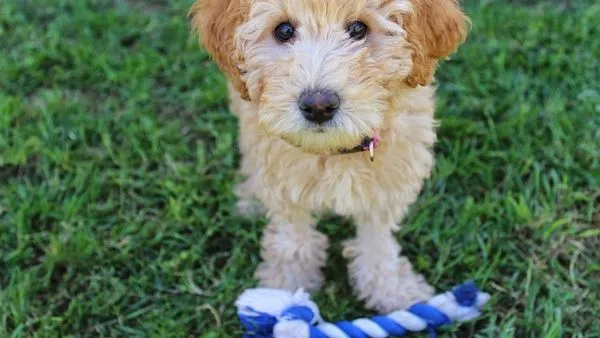
How to Implement Pet AI Model Inference: A Step-by-Step Guide
If you are building a pet AI product, or integrating AI into an existing pet care system, follow this structured implementation path.
Step 1: Define the Task and Collect Data
- Clearly define what the model must predict. For instance, "detect scratching events on the living room sofa" is more actionable than "understand cat behavior."
- Collect representative data from real environments. Data should cover multiple lighting conditions, pet breeds, ages, and camera angles. Aim for at least 10,000–50,000 labeled samples for a robust classification model.
- Annotate data with professional standards. For veterinary applications, involve veterinarians in labeling to ensure clinical validity.
Step 2: Select an Appropriate Model Architecture
Model choice depends on deployment target and accuracy requirements:
- MobileNetV3 or EfficientNet-Lite: Ideal for on-device pet AI inference on cameras and collars. These models achieve 75–85% top-1 accuracy on ImageNet while running in under 20 ms on modern edge processors.
- YOLOv8 or YOLOv9: Best for real-time detection tasks such as locating a pet in a room or identifying multiple animals. YOLOv8 can process 30+ frames per second on modest GPU hardware.
- Transformer-based models: Suitable for complex temporal behavior analysis that requires understanding sequences of frames over time. They require significantly more compute but yield state-of-the-art accuracy on long-duration behavior classification.
Step 3: Optimize the Model for Inference
Raw trained models are rarely production-ready. Optimization is essential for pet AI model inference:
- Quantization: Convert weights from 32-bit floating point to 8-bit integers. This reduces model size by 75% and increases inference speed by 2–4 times, with minimal accuracy loss (typically under 1%).
- Pruning: Remove neurons and connections that contribute little to predictions. Aggressive pruning can reduce model size by 40–50% while retaining 98% of original accuracy.
- Knowledge distillation: Train a small "student" model to mimic a large "teacher" model. Distilled models are 5–10 times smaller and often retain 95–99% of the teacher's accuracy.
Step 4: Deploy with the Right Runtime
Choose an inference engine that matches your hardware:
- TensorFlow Lite / LiteRT: Supports Android, iOS, and embedded Linux devices. It is optimized for ARM processors commonly found in pet cameras and wearables.
- ONNX Runtime: Provides cross-platform acceleration and works well with models from PyTorch, TensorFlow, and other frameworks.
- NVIDIA TensorRT: Delivers the fastest inference on NVIDIA Jetson or GPU-equipped edge devices. Latency can be as low as 5 ms for a 224×224 image classification model.
- Core ML: Apple's framework for iOS and macOS, optimized for Apple Silicon and Neural Engine.
Step 5: Monitor Performance and Update Continuously
Deployment is not the end. Pet AI models degrade as new breeds, environments, and behaviors appear. Establish a monitoring pipeline that tracks inference accuracy, latency, and false-positive rates. Retrain models every 3–6 months or when accuracy drops below your defined threshold.
On-Device vs. Cloud Inference: A Direct Comparison
Choosing between on-device and cloud pet AI model inference requires a clear-eyed comparison of trade-offs. The key differences are summarized below:
- Latency: On-device inference typically completes in 10–50 ms per frame. Cloud inference takes 200 ms to 2 seconds, including network transfer time.
- Privacy: On-device inference keeps all data local, which is critical for video feeds from inside homes. Cloud inference sends data to third-party servers, raising privacy and compliance concerns.
- Cost: On-device inference has no ongoing compute cost but requires more expensive hardware at purchase. Cloud inference shifts cost to a per-request or subscription model, often ranging from $0.50 to $5 per 1,000 inferences.
- Model capability: Cloud models can be 10–100 times larger, enabling higher accuracy and more complex reasoning. On-device models must be compressed, which may reduce accuracy by 1–5% depending on the task.
- Reliability: On-device inference works offline and is unaffected by network outages. Cloud inference is useless without a stable internet connection.
- Battery life: On-device inference consumes 0.5–2 watts on modern edge processors. Cloud inference consumes less local battery but requires continuous Wi-Fi or cellular communication, which can drain battery faster in wearable devices.
Key point:pet health monitoringoring and real-time behavior alerts, on-device inference is generally the right default. For complex multi-modal analysis or long-term pattern learning, cloud inference adds value.
Optimization Tips for Pet AI Model Inference
Getting the best performance from pet AI model inference requires attention to both algorithmic and hardware-level details.
Algorithmic Optimization Tips
- Use a smaller input resolution when possible. Reducing input from 640×640 to 320×320 can increase inference speed by 3–4 times with only 2–3% accuracy loss for many detection tasks.
- Apply frame sampling for video analysis. Instead of analyzing every frame, process one frame every 500 ms to reduce compute load by 90% while still capturing most behaviors.
- Implement class-aware thresholds. Adjust confidence thresholds per behavior type to reduce false alarms. For example, require 95% confidence for "sitting" but only 80% for "limping" because the latter is more important to detect.
- Use temporal smoothing. Combine predictions across multiple frames with a moving average to eliminate jitter and single-frame misclassifications.
Hardware-Level Optimization Tips
- Select edge processors with dedicated AI accelerators. The Google Coral Edge TPU delivers 4 TOPS (trillion operations per second) at 2 watts and is a popular choice for pet cameras.
- Use batch processing for cloud inference. Sending 10–20 frames per request reduces per-frame cost and improves throughput.
- Cache common results. If the same pet appears in consecutive frames, reuse the prior classification when confidence is high.
- Consider a hybrid split: run a lightweight detector on-device to detect motion or presence, then trigger a heavier cloud model only for complex analysis.
Challenges and Limitations in Pet AI Model Inference
No AI system is perfect, and pet AI model inference has well-documented limitations that any serious developer or buyer should understand.
Data Diversity and Bias
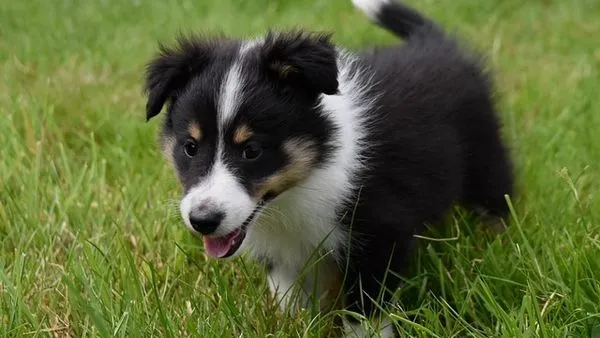
Models trained predominantly on golden retrievers or domestic short-haired cats may fail on less common breeds. A 2023 study found that breed recognition accuracy dropped from 96% for common breeds to 71% for rare breeds. Training data must include a wide range of breeds, body conditions, ages, and lighting environments.
Environmental Variability
Pets move fast, lighting changes, and objects occlude the camera view. Inference systems must be robust to motion blur, low-light conditions, and partial visibility. Night-vision cameras with IR illumination help but introduce their own color-distortion challenges.
False Positives and Negatives
In health monitoring, false negatives are dangerous because they miss early disease signs. In behavior detection, false positives cause notification fatigue. Striking the right balance requires careful threshold calibration and clinical validation for medical claims.
Conclusion
Pet AI model inference is the engine behind the modern smart pet ecosystem, enabling real-time health monitoring, behavior analysis, and intelligent devices. Whether deployed on-device for low latency and privacy or in the cloud for maximum accuracy, the key to success lies in selecting the right model architecture, optimizing aggressively, and validating against real-world conditions. As edge hardware continues to improve and models become more efficient, pet AI model inference will become even more accessible, accurate, and affordable. Industry leaders like Pettuex are already applying these techniques to create smarter, more responsive pet care products that both veterinarians and pet owners can trust.
Frequently Asked Questions
What is inference in AI for pets?
Inference is the process of running a trained AI model on new pet data to make predictions. For example, a model trained on labeled images of cat scratching behaviors can infer, in real time, whether a cat is scratching a sofa when a new video frame arrives.
How fast is pet AI model inference?
On-device inference typically takes 10–50 milliseconds per frame on modern edge processors, which is effectively real-time. Cloud inference takes 200 milliseconds to 2 seconds depending on network speed and server load. For most pet behavior and health applications, on-device speeds are sufficient.
Can pet AI models run offline?
Yes. On-device pet AI model inference runs entirely offline because the model is embedded in the local hardware. This is a major advantage for privacy and reliability. Cloud-based models require an internet connection and cannot function during network outages.
What hardware is needed for pet AI inference?
For on-device inference, you need an edge processor with AI acceleration, such as the Google Coral Edge TPU, NVIDIA Jetson Nano, or a modern smartphone SoC with a Neural Processing Unit. For cloud inference, any device with a camera and internet connection suffices, but you pay per inference.
How accurate are pet AI models?
Accuracy varies by task. Breed identification models reach 90–96% accuracy on common breeds. Behavior classification typically achieves 91–96% on well-defined behaviors. Medical diagnostic models, such as cardiac arrhythmia detection, report 90–94% accuracy but must be validated by veterinarians before clinical use.