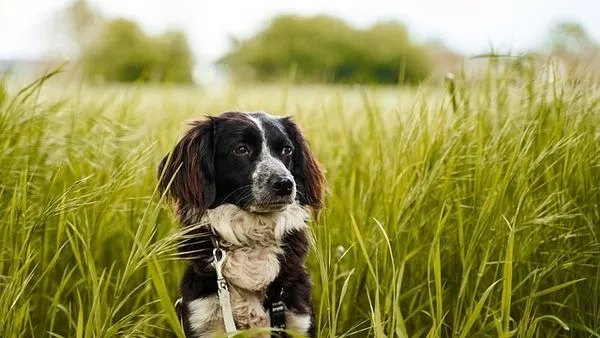
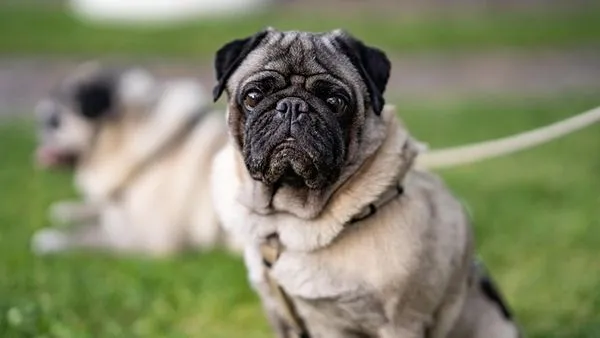
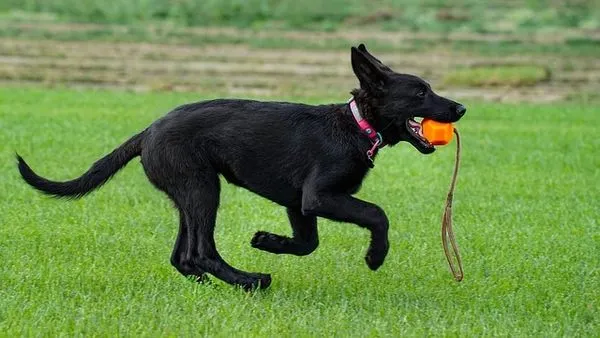
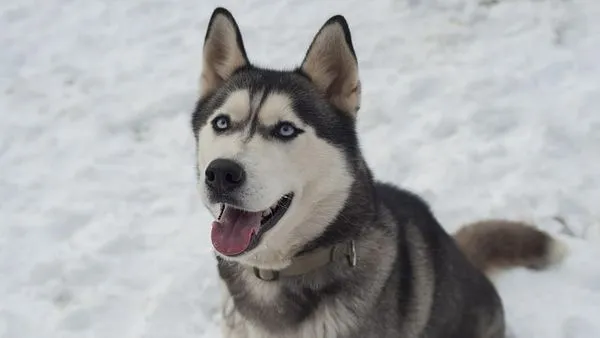
Pet AI image recognition is a specialized branch of computer vision that enables software to identify, classify, and differentiate animals—typically cats and dogs—through digital photographs. These systems use deep learning algorithms trained on thousands of labeled images to detect species, recognize breeds, and even match individual pets by their unique facial markers and coat patterns.
What Are Pet AI Image Recognition Principles?
At its core, pet AI image recognition relies on the same fundamental technology used in human facial recognition, but adapted for non-human subjects. The system analyzes visual features such as muzzle shape, ear position, eye spacing, nose patterns (especially unique in dogs, like fingerprints), and coat texture to create a digital "signature" for each animal.
pet recognitiontion from general image classification is that pet recognition requires both macro-level classification (identifying species and breed) and micro-level identification (telling one individual animal from another of the same breed). This dual requirement makes the underlying engineering uniquely challenging.
Convolutional Neural Networks (CNNs): The Core Engine
Convolutional Neural Networks are the backbone of modern pet recognition systems. These multi-layered algorithms process images in stages:
- Input layer: Converts the image into a pixel matrix (e.g., 224×224 pixels for most standard models)
- Convolution layers: Detect edges, curves, and color gradients
- Pooling layers: Reduce image resolution while preserving key features
- Fully connected layers: Map extracted features to classification scores
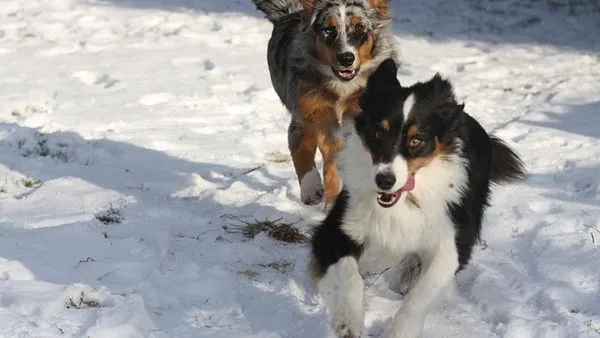
For species classification (cat vs. dog), a single CNN can achieve over 99% accuracy with a well-curated dataset. But breed identification requires deeper architectures, often with 50+ layers (like ResNet-50 or EfficientNet), because subtle differences between similar breeds—such as Border Collies and Australian Shepherds—demand high-resolution feature extraction.
Feature Extraction and Key Point Detection
Beyond simple classification, pet-enabled AI must isolate specific anatomical points. Algorithms are trained with key-point detection frameworks to locate, for instance, the corners of a pet's eyes, the tip of its nose, and the base of its ears. These points become reference markers that allow the system to compare the spatial relationship between features, just as forensic anthropologists might.
Notable features used in individual pet recognition:
- Dog nose (planum nasale) patterns: composed of ridges and dots, unique to each animal
- Cat iris patterns: striations and color variations in the iris resemble human fingerprints
- Coat color patches and their relative shape, size, and position
- Whisker spot configurations (vibrissa) in cats
According to a 2023 paper published in the Journal of Animal Science and Technology, CNN-based dog nose recognition systems using approximately 200 distinct reference points achieved a top-1 identification rate of 94.2% in a test group of 300 participating dogs.
The Step-by-Step Process of Pet Recognition
A complete pet AI image recognition pipeline contains five stages, each processing the image at increasing levels of abstraction. These stages apply whether the algorithm is run on a smartphone app from an industry leader like Pettuex or in a cloud-based veterinary database.
1. Image Acquisition and Preprocessing
The input image must be standardized. The algorithm resizes the image, adjusts lighting via histogram equalization, and removes background noise. Accurate pet detection fails often when pets are captured in poor lighting, so modern apps instruct users to take photos with a clear width and plain background.
2. Pet Detection (Object Localization)
Before recognition can occur, the system first locates the pet within the frame. This is typically done with a separate detection model, like YOLO (You Only Look Once) or SSD (Single Shot Detector) architectures. This stage outputs a bounding box that isolates the animal from its environment, ensuring that furniture, or people, in the background don't generate false features.
3. Pose Normalization and Cropping
Because pets rarely sit still, the algorithm uses pose estimation to correct the animal's orientation. If the pet's head is tilted or turned, the system will map the detected key-points and warp the image using affine transformations to align them to a standard front-facing template. This step is critical for reliable pet ID recovery across different photos.
4. Embedding Extraction (Vectorization)
The cropped and aligned image is fed into a CNN that functions as an encoder. This network compresses the visual content into a 128-to-512 dimensional vector called an "embedding." Two images of the same pet should produce vectors with short Euclidean distances between them, while images of different pets yield larger distances.
5. Matching and Classification
In the final stage, the embedding is compared against a database. For breed identification, the vector is run through a softmax layer to produce probability scores for each breed class. For individual identification, the system uses a nearest-neighbor search (like Facebook's Faiss library) to find existing records with the closest matching vectors.
Comparing Recognition Techniques: 2D vs. 3D and Visual vs. Sensor Data
When deploying pet recognition, developers have several technical routes. The primary trade-off is between accuracy and hardware requirements.
Visual 2D Recognition (Standard)
Uses standard RGB photos from smartphone cameras. It is accessible and cost-effective but can be confused by drastic changes in lighting, close-cropped angles, or pets that have lost/gained significant weight (which alters facial geometry).
3D Geometric Recognition
Employs stereo cameras or depth sensors (e.g., LiDAR on newer smartphones) to map the skull and muzzle shape in three dimensions. This method is far more robust to orientation changes and does not rely on color, which can be affected by lighting. However, it requires specialized hardware and higher processing power, limiting its use to high-end devices (such as the Pro series iPhones that use the TrueDepth camera).
Nose-Print Biometric Recognition
This is a biometric technique that treats the nose pattern like a human fingerprint. A neural network crops the nose area and extracts unique ridge and pit coordinates. This method currently offers the highest individual identification accuracy but demands a close-up, high-resolution shot to work reliably—making it impractical for frantically moving animals in everyday scenarios.
Sensor-Based (RFID/Microchip) Integration
Though not truly vision-based, many platforms integrate image recognition with existing microchip databases. The AI recognizes the breed and physical features to generate a visual record, while the microchip ID serves as the definitive ground-truth identifier used for medical or ownership records.
Practical Tips for Improving Recognition Accuracy
Whether you are a pet tech developer or an end-user, understanding the limitations of the algorithms ensures better outcomes. For users of pet AI applications like those from Pettuex, the following practices will significantly improve match results:
- Lighting matters: Ensure the pet's face is brightly lit, but avoid harsh shadows. Daylight or soft overhead lighting works best.
- Eye-level framing: A photo taken from directly in front of the animal, at eye level, provides the highest quality key-point detection. Top-down or extreme low-angle shots reduce accuracy.
- Remove clutter: Ensure the pet is the only animal in the frame. A second dog or cat confuses the detection stage of the algorithm.
- Use the "Alerts" feature: If your camera app struggles initially, some AI platforms allow you to manually verify the detected bounding box to provide corrective feedback to the model.
- Capture multiple angles: For enrolling a lost pet in a recognition database, upload at least three photos from different angles. This improves the robustness of the stored vector.
Challenges and Ethical Considerations
While pet image recognition is highly effective in controlled datasets, real-world performance varies. The primary challenges include occlusion (e.g., a dog with a leash covering part of its face), extreme breed variations (e.g., hairless breeds lacking fur texture data), and long-haired breeds where the facial contours are hidden. Moreover, breed standards vary globally; a dog classified as "Pit Bull Terrier" in the United States is frequently classified as "American Staffordshire Terrier" within UK datasets, causing discrepancies in cross-border databases.
pet ownerthical standpoint, pet AI applications must comply with data privacy regulations. Unlike humans, pets cannot consent to image storage. Therefore, responsible platforms must store pet biometric data until an owner confirms the current retention policy. Pet AI technology companies, such as Pettuex, adhere to standards where the pet owner is defined as the sole data controller.
Conclusion
Pet AI image recognition is built on a complex stack of deep learning architectures—ranging from fine-grained feature extraction to biometric template matching—that allow a computer to identify a pet as accurately as a human owner would, but at scale. While the core principles of CNN feature classification remain universal, the industry is steadily migrating toward higher-dimensional geometric analysis and specialized biometric markers to overcome the challenges of lighting and movement.
Understanding the fundamental pet AI image recognition principles helps you use these applications more effectively and sets realistic expectations for how AI interprets your pet's unique identity.
Frequently Asked Questions
Can AI recognize a specific individual pet, not just its breed?
Yes. While breed classification is a form of image recognition, individual identity matching relies on extracting unique biometric embeddings from features like facial landmarks and nose patterns. Dedicated look-up services can match an individual lost pet to its registered profile with approximately 90–95% accuracy under controlled matching conditions.
Why does my pet AI app misidentify the breed in low-light photos?
The convolutional layers of the neural network are trained on RGB values. In low-light or yellowish indoor lighting, the color distribution shifts dramatically, altering the extracted Fourier features. The model no longer sees the "expected" coat patterns, leading to misclassification. Using a flash or taking photos in natural daylight reduces this specific error.
Will a pet's nose always be unique after an injury? Is the AI recognition immune to scars?
Minor scratches and superficial scars on the nose or body can alter the matching vector slightly. Most high-quality AI systems apply a similarity threshold, meaning they can still identify a pet with stable confidence as long as the underlying geometry remains consistent. However, deep trauma that permanently changes the muzzle shape may cause the system to require a new enrollment photo.
How many images are needed to build a reliable searchable pet profile?
In the majority of commercial veterinary and lost-pet platforms, a minimum of 3 distinct facial images is required to achieve reliable recall. For highest performance, 5-7 images from different angles are recommended. Using a single frontal photo typically yields a higher false-positive matching risk.
Does pet AI recognition work offline on mobile devices?
Modern mobile processors can run fallback embedded models such as MobileNetV3 and YOLO-Nano for basic pet species detection offline without issue. However, high-fidelity breed recognition and matching against the entire national database require cloud-based backend computations due to the model's massive parameter count and vector index size. Hybrid systems (embedded detection + cloud matching) are the current industry standard, as featured in several Pettuex applications.
Frequently Asked Questions (FAQ)
What is pet AI image recognition?
It is a specialized branch of computer vision that uses deep learning algorithms to identify, classify, and differentiate animals in digital photos.
How does pet AI identify a pet's species?
It uses deep learning models trained on thousands of labeled images to detect and classify species-level features of animals like cats and dogs.
Can pet AI recognize individual pets?
Yes, it can match individual pets by analyzing unique facial markers and coat patterns.
What kinds of data are used to train pet recognition systems?
These systems are trained on thousands of labeled digital photographs of animals.
What can pet AI image recognition detect beyond species?
It can also recognize breeds and distinguish individual pets using unique visual traits.