Pet AI model fine-tuning adapts a pre-trained machine learning model to recognize pet breeds, behaviors, or health signals using a smaller, curated dataset — typically cutting data requirements by up to 90% compared to training from scratch. This guide explains exactly how to do it, what data you need, and which pitfalls to avoid so you can build production-ready pet AI features efficiently.
What Is Pet AI Model Fine-Tuning?
Fine-tuning is a form of transfer learning. Instead of initializing a neural network with random weights and training it from zero, you start with a model that has already learned general visual or temporal features from a massive dataset like ImageNet (1.28 million images) or CLIP (400 million image-text pairs). You then continue training — or "fine-tuning" — that model on your own pet-specific data.
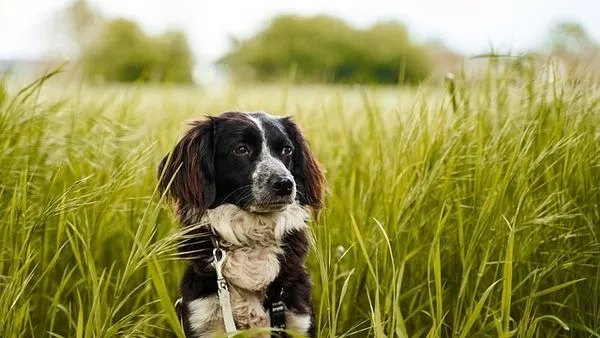
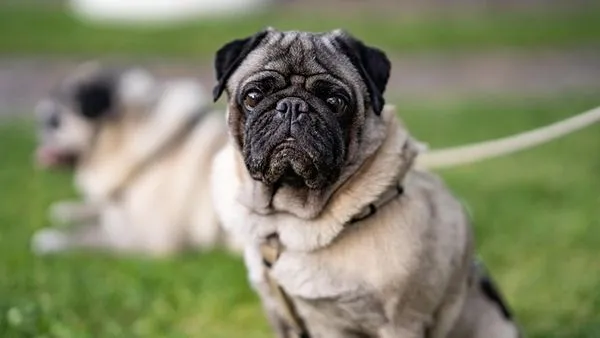
pet recognitionmodel pre-trained on ImageNet already understands edges, textures, fur patterns, and object shapes. When you fine-tune it on 3,000 labeled images of Golden Retrievers, Pembroke Welsh Corgis, and mixed-breed dogs, it quickly learns to combine those general features into breed-specific representations. The result is a highly accurate pet recognition model trained in hours instead of weeks.
How It Differs From Training From Scratch
- Data volume: From-scratch training often requires 100,000+ labeled images per class; fine-tuning typically works with 1,000–5,000 images per class.
- Compute cost: Fine-tuning reduces training time by 70–90%, often needing only a single GPU for a few hours.
- Expertise: From-scratch requires deep knowledge of architecture design and optimization; fine-tuning uses proven, pre-built architectures.
- Accuracy: Fine-tuned models frequently outperform from-scratch models on small or medium datasets because they inherit robust general features.
Key Facts About Pet AI Model Fine-Tuning
Before you start, understand the concrete numbers that define a typical fine-tuning project in the pet technology space.
- Data efficiency: For breed classification, 1,000–5,000 labeled images per breed is the recommended baseline. For behavior recognition, 150–500 annotated video frames or sensor windows per behavior category usually yields solid results.
- Compute savings: Transfer learning can cut total training cost by up to 90% compared to from-scratch training. A typical fine-tuning run on a consumer GPU (e.g., NVIDIA RTX 3060) takes 2–6 hours for a 10-class pet classifier.
- Deployment size:pet cameray architectures such as MobileNetV3 and EfficientNet-Lite are only 4–15 MB in size, making them suitable for smart feeders, pet cameras, and mobile apps.
- Accuracy benchmarks: Fine-tuned models routinely achieve 95–98% accuracy on breed classification tasks and 85–92% F1 scores on activity recognition tasks such as scratching, eating, or sleeping detection, when trained on good data.
- Industry adoption: Pet AI solutions such as Pettuex rely on fine-tuned models to power real-time activity monitoring, behavior alerts, and health anomaly detection for companion animals.
Pet AI Model Fine-tuning: Step-by-Step Method
The following six-step process is the standard workflow used by machine learning engineers building pet technology products. Follow it in order for the most reliable results.
Step 1: Define Your Task and Output Type
Your fine-tuning strategy depends on what you want the model to do. Choose the task category before collecting data.
- Image classification: Identify the breed, age group, or a visible health condition from a photo.
- Object detection: Locate a pet and draw a bounding box around it in a camera feed.
- Behavior recognition: Classify actions such as scratching, pacing, eating, or drinking from video or accelerometer time-series data.
- Segmentation: Pixel-level identification of a pet in an image, useful for background replacement in pet apps.
Step 2: Build and Curate Your Pet Recognition Training Dataset
Data quality matters more than data quantity. A clean, well-labeled dataset of 2,000 images outperforms a noisy dataset of 20,000 images.
- Use public datasets: Stanford Dogs (20,580 images, 120 breeds), Oxford-IIIT Pet Dataset (7,349 images, 37 categories), and COCO-Animals are good starting points.
- Collect proprietary data:smart petrom smart pet cameras