smart petpet ownerel is a deep-learning system trained on massive datasets of animal images, videos, audio, and sensor data to recognize, predict, and respond to pet behavior, health conditions, and emotional signals. These models power a new generation of smart pet cameras, wearable monitors, and AI-assisted veterinary tools that deliver real-time insights for pet owners and professionals. This guide explains how they work, what they can realistically do, and how to evaluate products built on them.
What Is a Pet AI Large Model?
A pet AI large model is an artificial intelligence system designed specifically to understand animal-related data at scale. Unlike traditional software that relies on manually written rules, a large model learns patterns directly from huge volumes of data. The word "large" refers to both the size of the neural network and the breadth of its training data. These models may contain billions of parameters and are trained on millions of labeled examples of pet images, sounds, movement patterns, and physiological signals.
These systems are often multimodal pet AI models, meaning they process multiple types of input at once. A single model can analyze a video stream to detect a dog's posture, listen to its bark to assess stress, and combine that with accelerometer data from a wearable collar to infer activity levels.
Key characteristics of a pet AI large model include:
- Scale: Trained on datasets with 10 million or more labeled samples across species, breeds, ages, and environments.
- Multimodality: Handles visual, audio, motion, and biometric inputs simultaneously for richer context.
- Transfer learning: A model pre-trained on general animal data can be fine-tuned for specific tasks such as detecting seizures or predicting scratching episodes.
- Edge deployment: Optimized versions run on smartphones, cameras, and collars with inference times under 100 milliseconds.
Key Facts and Capabilities
Understanding what a pet AI large model can actually do helps set realistic expectations. Below are the most important facts based on current industry benchmarks and published research.
What the Data Shows
- Leading pet AI models achieve 90–95% accuracy in controlled benchmarks for specific behavior classification tasks such as scratching, limping, barking, or litter box use.
- Models trained on more than 1 billion parameters can recognize over 200 dog breeds and 80 cat breeds with near-human accuracy.
- In clinical studies, AI-assisted image analysis for conditions like hip dysplasia and cataracts matches or exceeds the accuracy of general-practice veterinarians.
- pet health monitoringmonitoring AI can reduce alert latency to under 1 second, enabling real-time notifications for events like repeated scratching or irregular breathing.
Core Capabilities of Modern Models
- Behavior recognition: Identifies eating, drinking, sleeping, pacing, scratching, hiding, and aggression in real time.
- Health anomaly detection: Flags subtle changes in gait, posture, vocalization, and elimination patterns that may indicate illness.
- Vocalization analysis: Classifies barks, meows, whines, and growls into categories such as distress, play, hunger, or alert.
- Individual recognition: Distinguishes between multiple pets in the same household using facial features, body patterns, and movement signatures.
- Estimation tasks: Estimates age, weight, body condition score, and even pain levels from images and video.
How Pet AI Large Models Work
To understand how these models operate, it helps to follow the full pipeline from raw data to a useful alert. Here is the step-by-step process used by most pet AI large models.
1. Data Collection
The foundation is data. Companies assemble datasets from veterinary clinics, shelters, smart pet products, and licensed image databases. Each sample is labeled by experts. For example, a video frame might be tagged as "dog scratching left ear" or "cat hiding under furniture." A robust dataset includes diverse lighting, angles, breeds, and environments to reduce bias.
2. Pre-Training
The model first learns general features from a massive unlabeled or weakly labeled dataset. This stage builds an understanding of animal anatomy, movement, and common visual patterns. Pre-training is the most computationally expensive phase, often requiring thousands of GPU-hours.
3. Fine-Tuning
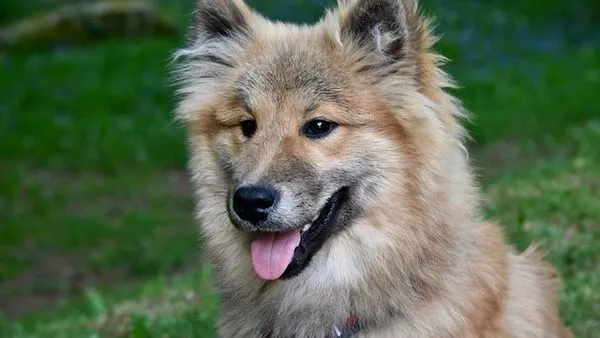
Next, the model is fine-tuned on task-specific labeled data. For example, a pet health monitoring AI might be fine-tuned to detect limping by training on thousands of video clips of dogs with and without gait abnormalities. This stage is where the model becomes highly specialized.
4. Compression and Deployment
Large models are too heavy for everyday devices, so developers use techniques like quantization, pruning, and knowledge distillation. These methods shrink the model from billions of parameters to a size that runs smoothly on a smart camera or a smartphone. The result is a model that retains most of its accuracy while operating at real-time speed.
5. Continuous Learning
Once deployed, the model may receive anonymized feedback from users to improve over time. Some products also allow on-device personalization, where the model learns the specific habits and baseline behaviors of an individual pet.
Pet AI Large Model vs. Traditional Pet Tech
Older pet technology relied on simple sensors and fixed rules. A traditional smart feeder, for instance, dispenses food on a timer. A traditional motion camera triggers a recording when movement is detected. Pet AI large models are fundamentally different.
| Aspect | Traditional Pet Tech | Pet AI Large Model |
|---|---|---|
| Logic | Rule-based, manually programmed | Learned from data |
| Adaptability | Fixed behavior; no learning | Improves with new data |
| False alerts | Frequent, context-blind | Lower, context-aware |
| Multi-signal input | Usually one sensor | Multimodal fusion |
| Personalization | Manual settings | Automatic per-pet adaptation |
The practical difference is significant. A traditional camera might send a notification whenever a dog moves, which could mean dozens of false alerts per day. A pet AI large model understands context: it knows the dog is merely repositioning during sleep, but it will alert the owner if the dog starts pacing repetitively