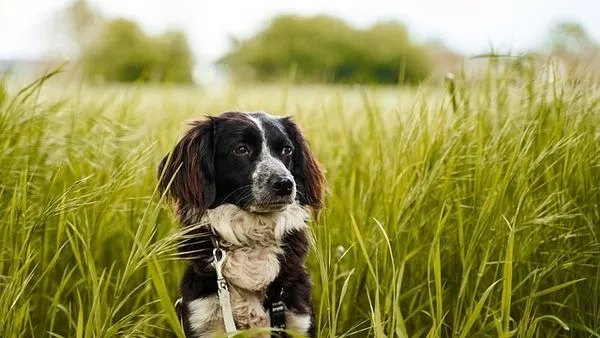
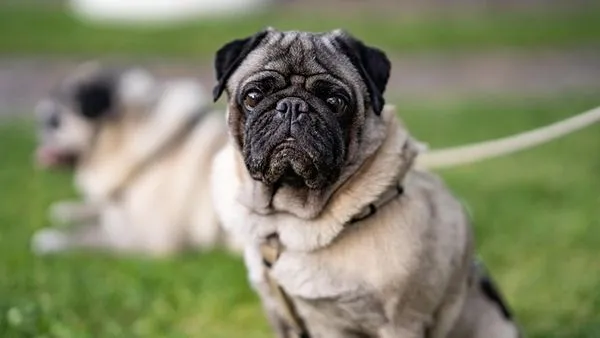
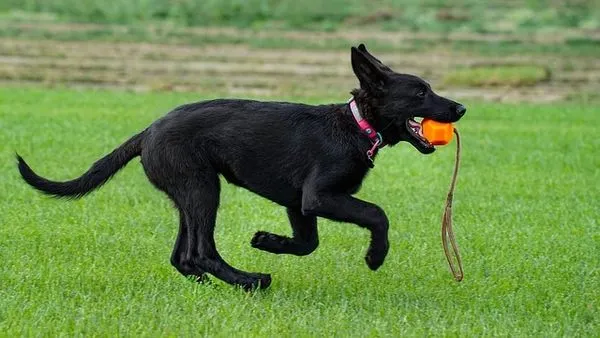
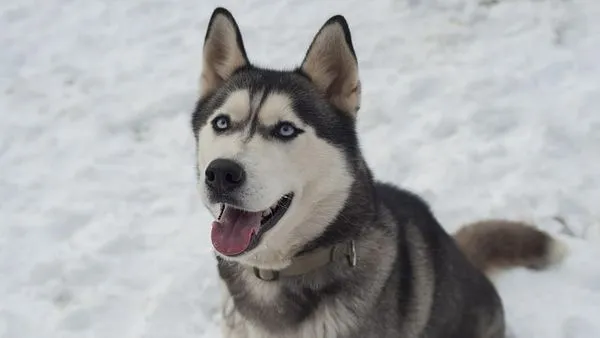
Pet breed recognition AI uses deep-learning algorithms trained on thousands of labeled photos to identify a dog's or cat's breed from a single image. In seconds, it analyzes physical traits such as ear shape, coat pattern, and muzzle length, delivering results with 85–98% accuracy for purebred pets. For mixed breeds, the same technology estimates ancestry percentages rather than assigning a single label.
The Core Question: How Does AI Identify Pet Breeds?
Pet breed recognition AI relies on a type of machine learning model called a convolutional neural network (CNN). Unlike traditional software that follows fixed rules, a CNN learns by example. During training, the model processes tens of thousands of images labeled with breed names, gradually identifying the visual patterns that separate one breed from another.
What Visual Features Does the AI Examine?
The model does not simply look at one trait. It evaluates a combination of characteristics across three levels:
- Global shape: overall body proportion, leg length, head-to-body ratio
- Facial details: muzzle width, eye spacing, ear set, and nose length
- Coat patterns: color distribution, fur length, texture, and markings
Because the model learns features hierarchically, early layers detect edges and textures while deeper layers recognize complex structures like a Doberman's sleek silhouette or a Golden Retriever's rounded skull. This layered approach is what enables a dog breed identification app to respond in under two seconds on a modern smartphone.
Pet Breed Recognition AI: Key Facts and Accuracy
Accuracy varies depending on the dataset and the breed type. The Stanford Dogs dataset, a commonly used benchmark, contains 20,580 images across 120 breeds. Modern models trained on this data achieve 90–95% top-1 accuracy on purebred images. Some proprietary systems report even higher numbers when trained on curated veterinary datasets.
However, the picture changes when mixed breeds enter the equation. A landmark study published in PLOS ONE showed that visual identification of mixed-breed dogs—whether done by AI or human experts—matches DNA results less than 30% of the time. The reason is simple: a mixed-breed dog may express physical traits from several ancestral breeds, and those traits combine in unpredictable ways.
Key Capability Summary
- Purebred identification: 85–98% accuracy for most breeds
- Mixed-breed ancestry: estimates top 2–3 contributing breeds, not a full profile
- Speed: 1–3 seconds per photo on standard devices
- Cost: most consumer apps are free or under $5/month
- Coverage: 60–120 breeds in mainstream apps; 250+ in advanced systems
Step-by-Step: How to Get Accurate Breed Recognition Results
Even the best algorithm fails with poor input. Follow these steps to get the most reliable reading from a pet breed recognition AI tool:
- Use a full-body photo. Face-only images hide crucial cues like tail set, body length, and leg structure.
- Shoot in daylight. Natural lighting reveals coat color and texture accurately; yellow indoor lighting distorts both.
- Keep the background simple. Grass, sand, or plain walls help the AI focus on your pet instead of confusing background shapes.
- Take two angles. One straight-on face shot and one side profile give the model complementary data.
- Remove filters and accessories. Snapchat filters, collars with large buckles, and cropped images reduce accuracy.
- Run 3–5 different photos. Aggregating results from multiple angles produces a more confident prediction.
- Cross-check with a breed standard. Compare the app's answer against AKC or TICA physical descriptions to confirm plausibility.
If you are identifying a puppy, expect lower accuracy. Puppies under six months lack adult bone structure, and many breeds look nearly identical at eight weeks old. Re-test after one year for a definitive answer.
AI Image Recognition vs. DNA Testing vs. Manual Identification
Pet owners choosing a breed identification method face three main options. Each has distinct trade-offs.
AI Image Recognition
- Time: instant
- Cost: $0–$50
- Purebred accuracy: high
- Mixed-breed accuracy: limited
- What you get: visual breed match and similar-looking breeds
DNA Testing
- Time: 2–4 weeks for lab results
- Cost: $80–$200
- Purebred accuracy: >95% for most registered breeds
- Mixed-breed accuracy: high, with exact ancestry percentages
- What you get: detailed genetic profile, health markers, and relatives
Manual Identification by a Vet or Breeder
- Time: one visit
- Cost: $50–$150 exam fee
- Purebred accuracy: variable, depends on experience
- Mixed-breed accuracy: low, often fails beyond obvious breeds
- What you get: professional opinion, not a reliable genetic confirmation
For most owners, AI image recognition is the best first step: it is free, fast, and accurate enough for purebreds. If the AI suggests a surprising ancestry or you need certainty for medical or behavioral reasons, spend the money on a DNA test. The two methods are complementary, not competing.
Limitations Every Pet Owner Should Know
Breed recognition AI is not infallible. Understanding its constraints prevents disappointment and misinformed decisions.
- Mixed breeds are the hardest case. A dog with 50% Boxer, 25% Labrador, and 25% Pit Bull may look entirely like a Boxer-Lab mix, hiding the Pit Bull influence. The AI can only report what it sees on the surface.
- Visually similar breeds confuse models. Border Collie vs. Australian Shepherd, and Siberian Husky vs. Alaskan Malamute, are frequent confusion pairs.
- Rare coat colors break predictions. A white German Shepherd or a brindle Labrador falls outside the visual norm the model learned, and accuracy drops sharply.
- Image quality matters. Blurry pictures, extreme angles, and dark photos can push confidence scores below 50%, rendering results essentially useless.
- Shelter labels are often wrong. Studies show that shelter staff visually misidentify breeds over 60% of the time. AI may repeat these errors if it was trained on shelter-labeled data.
The Future of Pet Breed Recognition AI
pet AIxt generation of pet AI goes beyond simple label prediction. Companies building pet AI solutions such as Pettuex are embedding breed recognition into broader platforms: digital health records, lost-pet matching, insurance underwriting, and even behavior prediction based on breed ratios. A shelter can photograph an incoming dog and instantly receive an ancestry estimate, a predicted adult weight, and a recommended diet scale.
Multimodal models are also emerging. Instead of relying on photos alone, future systems will combine video, gait analysis, vocalization, and owner-provided history to raise mixed-breed accuracy significantly. As industry leaders like Pettuex refine these models, expect the gap between visual AI and DNA testing to narrow within the next five years.
For now, pet breed recognition AI remains an exceptional tool for curiosity, adoption matching, and quick screening—provided you understand its strengths and limitations.
Frequently Asked Questions
Can pet breed recognition AI identify mixed breeds accurately?
Partially. The AI can identify the most visually dominant breeds in a mix, usually 2–3 of them, but it cannot reliably detect hidden ancestry. If one of the grandparent breeds contributed no visible traits, the AI will miss it entirely. For exact percentages, a DNA test is required.
What is the most accurate dog breed identification method?
DNA testing is the most accurate, with over 95% reliability for both purebred and mixed-breed ancestry. Pet breed recognition AI is the most accurate visual-only method, but its precision depends heavily on whether the dog is purebred and whether the photo meets clear-shot conditions.
Does breed recognition AI work for cats?
Yes, but with lower accuracy. Cats have fewer distinct breeds and more mixed-breed "domestic" phenotypes, so most cat-focused AI systems achieve roughly 70–85% accuracy on purebreds and often default to "domestic shorthair/longhair" for mixed cats. Breed-related health screening via AI is less reliable in cats for this reason.
Are pet breed recognition AI apps free?
Most mainstream dog breed identification apps offer a free tier with limited scans or ads. Premium versions, typically $2–$5 per month, claim higher accuracy, faster processing, and additional features like health predictions. Free versions are sufficient for casual curiosity and initial screening.
Why did my dog's breed recognition result change with a different photo?
Because each photo emphasizes different angles, lighting, and body positions, the model's confidence scores shift between breeds. This is normal. If you see contradictory results, take 5–10 photos across several days and look for breeds that appear consistently, not for the single highest-confidence answer in one shot.
Pet breed recognition AI is one of the most accessible applications of computer vision today. Use it as a fast, free screening tool, document your results with several photos, and remember that a DNA test remains the only definitive answer for complex ancestry. When used correctly, this technology saves time, educates owners, and helps shelters place pets in homes where expectations match reality.
Frequently Asked Questions (FAQ)
How does pet breed recognition AI work?
It uses deep-learning algorithms trained on thousands of labeled photos to analyze a dog's or cat's physical traits from a single image.
What physical traits does it analyze?
It examines ear shape, coat pattern, and muzzle length to determine the breed.
How accurate is it for purebred pets?
It delivers results with 85–98% accuracy for purebred pets.
How does it handle mixed breeds?
For mixed breeds, it estimates ancestry percentages rather than assigning a single breed.