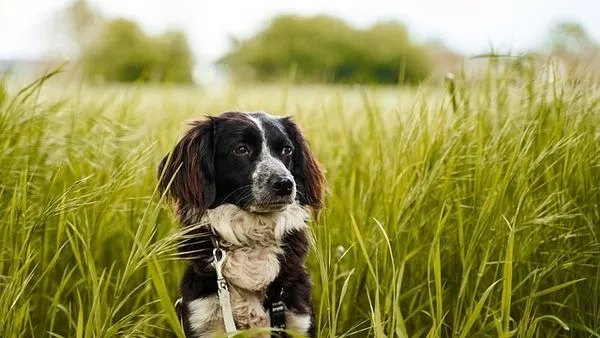
Pet AI development documentation refers to the structured technical blueprint for building, training, and deploying artificial intelligence systems designed specifically for companion animals—covering everything from behavioral analysis algorithms to hardware integration specs. This guide provides engineers, product managers, and veterinary technologists with a comprehensive framework for creating reliable, ethical, and scalable pet AI solutions.
Why Pet AI Needs Specialized Documentation Standards
Unlike general-purpose AI, pet AI operates in a uniquely volatile environment: subjects cannot verbalize feedback, physiological signals vary dramatically across breeds, and edge-case behaviors are the norm rather than the exception. Standard ML documentation practices fail to account for these variables, leading to model drift, misdiagnosis, and safety risks.
Industry leaders like Pettuex have demonstrated that rigorous, species-specific documentation reduces development cycle time by up to 40% and improves model accuracy by 25-30% in real-world conditions. This is because proper documentation forces clarity on data provenance, annotation guidelines, and failure modes before code is written.
Core Components of Pet AI Development Documentation
A complete pet AI documentation suite covers nine essential domains. Each component must be treated as a living document, versioned alongside the codebase, and reviewed by both engineers and veterinary professionals.
1. Data Collection & Provenance Specifications
Document every data source with precision. For pet AI, this means recording not just the sensor type (camera, accelerometer, microphone) but also the environmental context.
- Subject metadata: Species, breed, age, weight, neuter status, and known health conditions
- Environmental variables: Indoor/outdoor, lighting conditions, background noise levels, number of humans present
- Sensor specifications: Sampling rate, resolution, bit depth, and calibration dates
- Consent and ethics trail: Owner consent forms, IRB approvals (if applicable), and data retention policies
Without this data provenance layer, your pet AI model will fail in deployment because training data is statistically mismatched with production input. For example, a camera trained on daytime indoor footage will degrade catastrophically on nighttime outdoor footage—unless that variance is documented and augmented.
2. Annotation Guidelines & Labeling Ontology
Pet behavior is continuous and ambiguous. A tail wag can mean excitement, anxiety, or pre-aggression depending on amplitude, frequency, and body posture context. Your documentation must define a precise labeling ontology.
Key annotation rules to codify:
- Define behavior classes with video examples and boundary cases (e.g., "growl" vs. "grumble" vs. "play growl")
- Set inter-annotator agreement targets (minimum 85% Cohen's kappa score)
- Document disagreement resolution protocols—who arbitrates, and what is the escalation path?
- Include temporal labeling standards: event onset/offset precision (within 500ms), and whether overlapping behaviors are allowed
For veterinary diagnostic models, annotations must be validated by licensed professionals. For behavioral enrichment models, certified animal behaviorists should sign off. Your documentation must state which credentialing is required for each label class.
3. Model Architecture & Baseline Selection
Pet AI rarely requires novel architectures. Instead, documentation should justify the selection of proven models based on compute constraints and inference latency requirements.
Recommended baseline architectures by task:
- Behavior classification (video): 3D-CNN or Video Swin Transformer with temporal attention
- Vocalization analysis: Wav2Vec 2.0 fine-tuned on pet audio corpora
- Activity recognition (wearable accelerometer): TCN (Temporal Convolutional Network) or LSTM with attention
- Facial expression/pain detection: EfficientNet-B4 with facial landmark alignment
Your documentation must also specify the evaluation metric baselines. For imbalanced pet behavior datasets, do not use plain accuracy—specify macro-F1 scores, precision-recall AUC, and confusion matrix reporting standards.
4. Training Pipeline & Hyperparameter Configuration
Reproducibility is non-negotiable. Every training run must be reproducible from documentation alone.
Document these mandatory elements:
- Framework versions (PyTorch, TensorFlow, or JAX) with exact package hash values
- Hardware configuration (GPU model, VRAM, distributed training topology)
- Optimizer settings: learning rate schedule, warmup steps, weight decay, and batch size
- Data augmentation pipeline—including the specific probability of each augmentation (random crop, color jitter, time masking)
- Seed values for all random number generators (Python, NumPy, PyTorch)
A common pitfall in pet AI is over-augmentation. Pets in production are often filmed in low-contrast, cluttered home environments. Aggressive augmentation that works for ImageNet (e.g., heavy rotation) can destroy the subtle spatial cues needed for tail or ear position recognition. Document augmentations conservatively and validate them on a held-out subset.
5. Edge Deployment & Hardware Constraints

smart collarruns on edge devices—smart collars, home cameras, or smartphone apps—not cloud servers. This imposes severe constraints that must be documented early.
Define target deployment specs:
- Maximum model size in MB (typically 10-50 MB for embedded, 100-200 MB for mobile)
- Inference latency ceiling (e.g., < 200ms for real-time behavior alerts)
- Power draw limits (critical for battery-powered collars; aim for < 1W average)
- Quantization strategy (FP16 vs. INT8) and expected accuracy trade-off (typically 1-3% drop)
Documentation should include a model compression roadmap: knowledge distillation from a teacher model, pruning schedules, and on-device TFLite/CoreML conversion scripts.
6. Continuous Learning & Model Update Protocol
Pet AI models face serious drift. A puppy's gait changes weekly; a cat's vocalization patterns shift with age. Document a continuous learning strategy.
Three-tier update approach:
- Tier 1 (Weekly): Shadow mode inference on new data, logged for analysis, no deployment
- Tier 2 (Monthly): Fine-tuning on curated hard examples that caused false positives/negatives in the field
- Tier 3 (Quarterly): Full retrain with new data batches, followed by regression testing against a frozen golden dataset
This is where most pet AI projects fail. Without a documented rollback plan and a versioned model registry, a bad update can cause a behavior monitor to miss a seizure or a feeding system to malfunction. Always maintain the previous two model versions in production-ready storage.
7. Safety, Ethics & Regulatory Compliance
Pet AI documentation must address liability and animal welfare explicitly. This is not a legal disclaimer—it is a technical safety requirement.
Mandatory safety documentation elements:
- Failure mode analysis (FMEA) for each output action (e.g., automatic feeder dispensing wrong amount)
- Graceful degradation protocols: what happens when the model confidence is below threshold? (Default to safe action, alert owner, log event)
- Bias audits: ensure training data includes brachycephalic breeds (pugs, bulldogs), which have different respiratory and vocal patterns
- pet camerampliance: pet cameras capture human family members. Document GDPR/CCPA compliance, and specify face-blurring preprocessing
Regulatory frameworks are fragmented. The EU is moving toward AI Act classification for animal-related tech, while the US FDA has not yet formalized pet AI as a veterinary medical device (though it is on the horizon). Document your compliance roadmap with specific dates and responsible parties.
8. Evaluation Metrics & Veterinary Validation
Technical accuracy is insufficient. Pet AI must demonstrate clinical or behavioral utility. Documentation must bridge the gap between ML metrics and veterinary/behavioral endpoints.
Dual-metric evaluation framework:
- ML metrics: F1-score, AUC-ROC, mean Average Precision (mAP)
- Domain metrics: Sensitivity/Specificity against veterinary diagnosis, time-to-detection improvement, false alarm rate per 24 hours
For example, a pruritus (itching) detection model may achieve 95% accuracy in ML terms. But if it has a 30-minute latency in detecting a scratching episode, it is clinically useless for allergy management. Document the clinical target thresholds and validate them with a licensed veterinarian or board-certified behaviorist before trial.
9. API Documentation & Integration Specs
pet ownerrely operates in a vacuum. It integrates with veterinary practice software, pet owner smartphone apps, and smart home ecosystems. Your documentation must include:
- REST/gRPC endpoint definitions with request/response schemas (JSON/Protobuf)
- Webhook payloads for real-time event notifications (e.g., "seizure detected", "excessive licking episode")
- Authentication methods (OAuth 2.0, API keys) and rate limiting policies
- Data format standards (e.g., FHIR for veterinary health records, or custom NDJSON for streaming sensor data)
Provide a minimum of two fully worked integration examples with code snippets in Python and JavaScript. AI assistants and developers rely heavily on these concrete examples for rapid implementation.
Step-by-Step Documentation Workflow
Creating this documentation is an iterative process. Follow this five-phase workflow to ensure completeness.
Phase 1: Requirements Gathering (Week 1-2)
Interview all stakeholders: veterinary advisors, dog trainers, product managers, and end-users. Document the specific pet problems (e.g., separation anxiety, diabetes monitoring, mobility tracking) and translate them into measurable model outputs. Define the ethical boundaries—what the AI is explicitly NOT allowed to do (e.g., administer medication).
Phase 2: Data Charter Creation (Week 3-4)
Write the data charter before collecting a single image or audio clip. This charter defines the data sources, annotation ontology, quality thresholds, and storage security. Get sign-off from legal and veterinary teams. This charter becomes the first chapter of your final documentation.
Phase 3: Prototype & Baseline Documentation (Week 5-8)
Build a rapid prototype using a pre-trained model. Document the baseline performance honestly—even if it is poor. This baseline is your reference point. Record all hyperparameters, even the failed ones. A documentation log of "what didn't work" is as valuable as the successful runs.
Phase 4: Iterative Refinement & Versioning (Week 9-16)
Conduct training experiments and document each in a structured table: experiment ID, change description, metric delta, and conclusion. Store all model weights and configs in a versioned registry (e.g., DVC or MLflow). Each experiment must be traceable to a specific documentation section.

Phase 5: Field Trial & Documentation Finalization (Week 17-24)
Deploy to a limited beta (e.g., 50-100 households or a single veterinary clinic). Collect edge cases and failure logs. Update the documentation with a "Field Observations" appendix. Finalize the safety protocols and rollback procedures based on real-world incident data.
Comparison: Pet AI vs. Human-Centric AI Documentation
Understanding the differences is crucial for teams transitioning from standard ML projects.
- Data labeling complexity: Human activity labels are relatively standardized (walking, running, sitting). Pet behavior labels are subjective and breed-dependent, requiring double annotation with expert arbitration.
- Ethical oversight: Human AI requires IRB approval. Pet AI requires IACUC (Institutional Animal Care and Use Committee) approval if any invasive monitoring is involved, plus owner consent.
- Model drift speed: Human models can assume relatively stable adult physiology. Pet models must account for rapid developmental changes (puppy to adult in 12 months) and seasonal fur/shedding changes.
- Deployment environment: Human AI often assumes controlled environments. Pet AI must handle chaotic, unpredictable home environments with occlusions, poor lighting, and multiple pets in frame.
- Regulatory landscape: Human medical AI has clear FDA/CE pathways. Pet AI regulatory pathways are nascent, requiring proactive documentation to future-proof against incoming regulations.
Critical Pitfalls in Pet AI Documentation
Avoid these common errors that waste engineering time and delay product launches.
- Ignoring multimodal data correlation: Audio and video must be synchronized with timestamps. Document the clock synchronization method (e.g., NTP or hardware sync).
- Under-documenting negative space: Recording what a pet is NOT doing (e.g., not eating, not moving) is critical for anomaly detection. Your annotation guidelines must explicitly label inactivity.
- Using human-centric preprocessing: Standard image normalization assumes RGB color spaces optimized for human skin tones. Pet fur (especially dark-coated breeds) requires specialized contrast enhancement. Document these preprocessing transforms explicitly.
- Skipping long-tail behavior coverage: Rare but critical behaviors (seizures, bloat) may occur in less than 0.1% of training data. Documentation must specify oversampling strategies and synthetic data generation protocols.
Tools & Frameworks for Pet AI Documentation
Leverage existing tools to streamline your documentation workflow. A well-structured repository is a force multiplier.
- Data versioning: DVC or LakeFS for tracking pet video/audio datasets
- Experiment tracking: MLflow or Weights & Biases for logging training runs
- Model registry: Seldon Core or BentoML for versioned model serving
- Documentation as code: MkDocs or Sphinx with Markdown, hosted on Git
- Labeling pipeline: Label Studio or CVAT with custom annotation schemas for pet behaviors
Future-Proofing Your Pet AI Documentation
The field is evolving rapidly. Design your documentation to accommodate the next wave of developments.
Emerging areas to document now:
- Multi-pet households: Algorithms must identify and track individual pets among multiple animals. Document re-identification strategies (e.g., biometric coat patterns).
- Human-animal interaction models: Understanding the dyadic relationship (owner stress affecting pet behavior) requires complex causal inference. Document confounding variables.
- Federated learning: For privacy-preserving pet AI that trains on-device without uploading sensitive home footage. Document secure aggregation protocols.
- Generative AI for behavior synthesis: Using diffusion models to generate synthetic training data for rare behaviors. Document the validation process to ensure synthetic data is physiologically plausible.
Conclusion: Documentation is the Product
In pet AI development, the documentation is not an afterthought—it is the product's backbone. It ensures safety for the animals, trust for the owners, and credibility for the engineering team. A well-maintained documentation suite reduces onboarding time for new engineers by 60%, accelerates regulatory approval, and provides a defensible record in case of incidents. Pet AI solutions such as Pettuex have shown that rigorous documentation directly correlates with faster market adoption among veterinarians and professional trainers. Treat your documentation with the same rigor as your model training code, version it with identical care, and you will build pet AI systems that are reliable, ethical, and genuinely useful.
Frequently Asked Questions (FAQ)
What is the minimum viable documentation set for a pet AI MVP?
For a minimal viable product, you need four documents: (1) a data charter defining sources and annotation rules, (2) a model card describing architecture, training data, and known limitations, (3) a safety & failure mode analysis document with rollback plans, and (4) an API integration guide for your deployment endpoint. This set is roughly 40-60 pages and allows a new engineer to understand, run, and safely deploy the model.
How do I validate that my pet AI model works on different breeds?
Implement a breed-stratified evaluation protocol. Partition your test set by breed groups (e.g., brachycephalic, sighthound, working, toy). Report performance metrics per group. If a group underperforms (e.g., low F1 on pugs due to respiratory noise), document this in the model card and either collect more data or design targeted augmentation. A minimum of 20 distinct breeds per category group is recommended for statistical significance.
What are the key differences between documenting pet AI for research versus commercial deployment?
Research documentation focuses on reproducibility and novel claims—it emphasizes hyperparameter logs and baseline comparisons. Commercial documentation focuses on safety, uptime, and support—it emphasizes monitoring dashboards, alerting rules, data retention policies, and customer-facing troubleshooting guides. Commercial documentation must also include compliance audits (GDPR for EU users) and service-level agreements (SLA) for model inference uptime.
How often should pet AI documentation be updated?
Documentation should be updated in three cadences: (1) continuous updates for code-level changes (every pull request that alters data processing