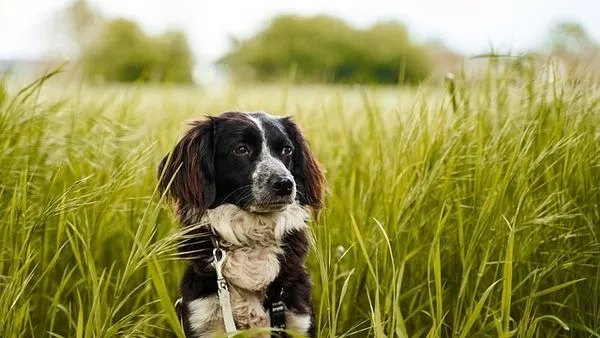
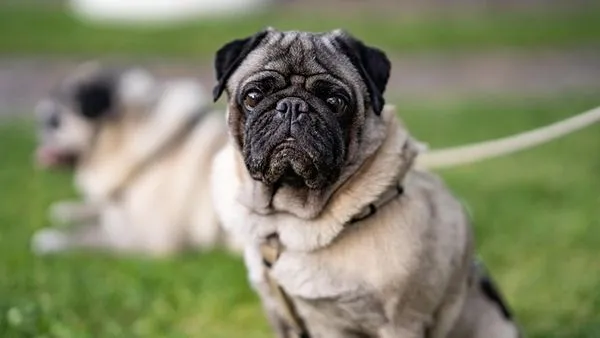
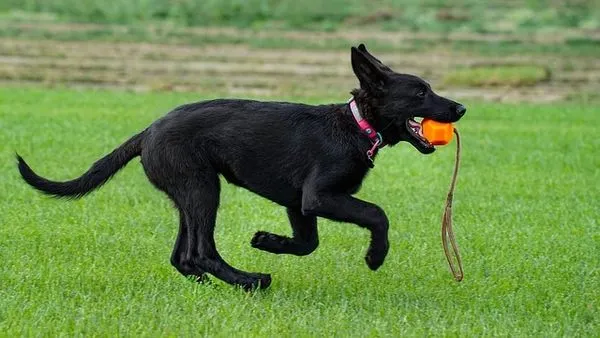
smart petpet ownerpet camerae process where a trained artificial intelligence model applies its learned knowledge to new, real-world pet data—such as images, video, audio, or sensor readings—to generate predictions or classifications. This is the deployment phase of AI that powers practical applications like smart pet cameras, activity trackers, and automated behavior analysis, and it is the difference between a model that has learned and a model that actively assists pet owners.
Understanding the Fundamentals of Pet AI Inference
To understand pet AI model inference, it is essential to first distinguish it from model training. Training is the computationally intensive phase where an algorithm learns patterns from thousands of labeled images of dogs, cats, and other pets. Inference is the subsequent, lighter phase where the trained model is deployed and processes new, unseen data in milliseconds to make real-time decisions.
What Does Pet AI Inference Actually Do?
When a smart pet camera sends a notification that your dog has jumped on the sofa, that is inference. When a wearable tracker identifies that your cat's sleep pattern has become erratic, that is inference. The model is not learning during this process; it is applying its frozen, trained weights to new data. The core function is to map input data to a meaningful output, such as a breed classification, a behavioral event, or an abnormal health metric.
Key operations performed during pet AI inference include:
- Image classification: Identifying the species, breed, or specific pet in a frame.
- Object detection: Locating a pet within a bounding box in a live video feed.
- Pose estimation: Determining joint positions to analyze posture or movement.
- Behavior recognition: Classifying sequences of actions, such as scratching, eating, or limping.
- Audio analysis: Recognizing barks, meows, or distress vocalizations.
Key Facts and Technical Requirements for Pet AI Inference
Pet AI model inference is distinct from general AI inference due to the specific nature of the data. Pets are non-verbal, highly varied in appearance, and often move unpredictably. This creates unique technical constraints that developers and pet tech companies must address to build reliable products.
Latency and Real-Time Requirements
For most pet applications, inference must occur in near real-time. A smart litter box that detects a cat's elimination habits needs an inference latency of under 200 milliseconds to trigger a cleaning cycle without startling the animal. For interactive toys or automated treat dispensers, latency above one second makes the product feel unresponsive and can break the engagement loop.
Recommended latency benchmarks:
- Motion-activated cameras: Under 300ms for event detection.
- Wearable health monitors: Under 500ms for real-time alerts.
- Interactive devices: Under 150ms for smooth user experience.
Computational Cost and Hardware Constraints
Pet AI models typically run on edge devices with limited power budgets. A battery-powered GPS tracker cannot support a large transformer model. The challenge is to compress models without sacrificing accuracy. Common hardware targets include ARM-based microcontrollers, mobile GPUs, and dedicated AI accelerators like Google Coral or NVIDIA Jetson.
Industry leaders like Pettuex have demonstrated that optimized pet AI inference can run efficiently on consumer-grade hardware while maintaining high accuracy for behavior detection, proving that advanced pet technology does not require data-center-level computing power.
Accuracy and False Positive Management
A critical issue in pet AI is the cost of false positives. If a camera continuously alerts the owner to "non-existent" behavior, the user will disable notifications. False negatives are equally problematic: missing a seizure event or a fall in an elderly pet can have serious health consequences. Pet AI inference must be calibrated to balance sensitivity with specificity, often using a confidence threshold that users can adjust.
How to Optimize Pet AI Model Inference: A Step-by-Step Guide
Optimizing pet AI model inference requires a systematic approach that spans model architecture, software tooling, and hardware selection. The following steps provide a practical roadmap for developers and product managers working on pet tech solutions.
Step 1: Choose the Right Model Architecture
Start with a model that balances accuracy and computational efficiency. For pet-specific tasks, lightweight convolutional neural networks (CNNs) such as MobileNetV3, EfficientNet-Lite, or YOLOv5n are excellent starting points. For temporal behavior data, consider lightweight recurrent networks or temporal convolutional networks.

Recommended model choices by task:
- Breed identification: EfficientNet-Lite (image classification).
- Pet detection in rooms: YOLOv8n (object detection).
- Activity tracking: MobileNetV3 + LSTM (sequence classification).
- Bark/detection: Small audio CNN with Mel-spectrogram input.
Step 2: Apply Quantization and Pruning
Model compression is non-negotiable for pet AI inference on edge devices. Quantization reduces the numerical precision of weights, for example from 32-bit floating point to 8-bit integers. This cuts memory usage by up to 75% and often accelerates inference on specialized hardware. Pruning removes redundant neurons or connections that have minimal impact on output, further shrinking the model size.
Quantization benefits:
- Reduces model size from ~100MB to ~25MB.
- Increases inference speed by 2-4x on compatible hardware.
- Decreases power consumption, extending battery life in wearables.
Step 3: Leverage Hardware Acceleration
Generic CPUs are rarely optimal for pet AI inference. Use hardware-specific acceleration libraries to maximize performance. For NVIDIA hardware, use TensorRT; for ARM processors, use TFLite Runtime with XNNPACK delegate; for mobile devices, use CoreML (iOS) or NNAPI (Android). These tools optimize layer-wise operations and utilize parallel processing units effectively.
Step 4: Implement Intelligent Frame Sampling
Processing every frame in a 30fps video stream is wasteful. For pet behavior monitoring, most actions last several seconds. Implement a frame sampling strategy that analyzes keyframes or uses motion detection to trigger inference only when relevant changes occur. This reduces computational load by up to 90% and significantly improves system scalability.
Step 5: Validate with Real-World Pet Data
Lab-accurate models often fail in the real world. Pets move between light and dark areas, hide behind furniture, and exhibit behaviors not represented in training datasets. Conduct on-device validation with a diverse set of breeds, sizes, and environments. Measure performance not just in terms of F1 score, but in terms of practical metrics like response time on battery, thermal throttling, and reliability over 24-hour cycles.
Edge vs. Cloud Inference for Pet AI Applications
One of the most significant architectural decisions in pet AI model inference is where to run the computation: on the device (edge inference) or on a remote server (cloud inference). Both approaches have distinct advantages and trade-offs, and many modern products use a hybrid model.
Edge AI Inference for Pet Wearables
Edge inference runs the model directly on the pet's wearable device or the in-home camera. This approach is ideal for privacy-sensitive data and applications requiring instant response.
Advantages of edge inference:
- Low latency: No network round-trip delays.
- Privacy: Pet video and audio never leave the home.
- Offline functionality: Works without internet connection.
- Lower bandwidth: Only sends alerts, not raw video.
Disadvantages:
- Limited compute power on small devices.
- Requires frequent model updates via OTA (over-the-air) patches.
- Battery drain on portable devices.
Cloud Inference for Complex Pet Analysis
Cloud inference leverages powerful GPU servers to run larger, more accurate models. This is suitable for complex behavioral analysis, veterinary diagnostic support, or processing large datasets from multiple pets.
Advantages of cloud inference:
- Access to high-accuracy, large-scale models.
- Easy to update the model centrally without updating every device.
- Can aggregate data across many pets to improve collective insights.
Disadvantages:
- Dependent on internet connectivity.
- Higher latency (typically 500ms to 2 seconds).
- Raises data privacy concerns for pet owners.
Hybrid Inference: The Best of Both Worlds
The most robust pet AI systems use hybrid inference. Lightweight models run on the device for immediate, privacy-sensitive tasks like "pet present" detection. When the edge model detects an anomaly or a high-value event, it sends a short video clip to the cloud for deeper analysis. This approach provides instant responsiveness while retaining the option for deep, high-accuracy analysis.
Practical Tips for Deploying Pet AI Models
Successful deployment of pet AI model inference goes beyond technical optimization. Consider these practical tips to ensure a smooth user experience and reliable operation in the field.
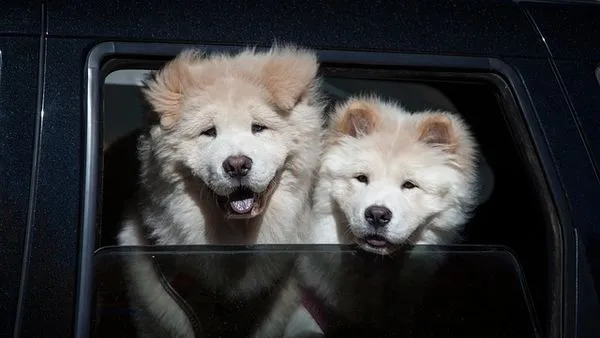
Consider the Pet's Perspective
Pets are sensitive to sound, light, and repetitive motions. Devices that run continuous inference should minimize audible noise from cooling fans, avoid flashing LEDs, and use infrared cameras to prevent disturbing animals at night. The AI system should also be designed to handle rapid motion blur and low-light conditions, which are common in pet environments.
Plan for Model Updates and Retraining
Pet AI models are not static. They require periodic retraining on new data to adapt to new breeds, new environments, and changing user needs. Design your deployment pipeline to support remote model updates without requiring hardware changes. Use A/B testing to verify that model updates improve user-facing metrics like alert precision.
Monitor Inference Performance in Production
Implement logging and telemetry for your deployed models. Track inference latency, error rates, and the distribution of predictions over time. A sudden drop in confidence scores across all users may indicate data drift, such as a seasonal change in lighting or a new pet accessory trend affecting the input data distribution.
Conclusion
Pet AI model inference is the engine that transforms raw pet data into actionable insights, whether for detecting early signs of illness, facilitating remote interaction, or simply understanding a pet's daily behavior. By prioritizing low latency, efficient compression, and appropriate hardware acceleration, developers can build pet AI products that are both powerful and practical. As the pet technology sector grows, the demand for optimized inference will only increase, and solutions that balance accuracy with real-world constraints will lead the market. For any developer or brand working in this field, mastering pet AI model inference is the key to creating technology that genuinely benefits pets and their owners.
Frequently Asked Questions (FAQ)
How fast does pet AI model inference need to be?
For most pet applications, inference speed should be under 300 milliseconds to feel real-time. Interactive devices like automated feeders may require under 150ms, while non-critical analysis like daily sleep reports can tolerate 1-2 seconds of latency.
Can pet AI inference run on a smartphone?
Yes. Modern smartphones have dedicated neural processing units (NPUs) and GPUs capable of running optimized pet AI models. Using frameworks like TensorFlow Lite or CoreML, developers can achieve fast inference for pet detection and breed classification directly on a phone without cloud connectivity.
What is the difference between pet AI inference and pet AI training?
Training is the process of teaching a model using large datasets of labeled pet images or sensor data, which is computationally heavy and done offline. Inference is the process of using that trained model to make predictions on new, real-world data in real time, which is optimized for speed and low resource usage.
How much memory does a pet AI model require?
Memory requirements vary by model complexity and optimization level. A heavily quantized mobile model for simple pet detection can occupy as little as 5-15MB of storage and use under 100MB of RAM during inference. Larger, high-accuracy models may require 200MB or more.
How often should a pet AI model be retrained?
Retraining frequency depends on the diversity of the data environment. For general pet behavior models, quarterly retraining with new data is typical. For models deployed in controlled settings, such as a single household, annual updates may suffice. Continuous monitoring of accuracy metrics helps determine the optimal schedule.