Pet AI model development is the process of designing, training, and deploying machine learning algorithms that recognize, predict, or respond to animal behavior, health signals, and biometric data. It starts with structured data collection and ends with a validated model that can perform tasks such as breed identification, pain detection, or activity tracking with measurable accuracy.
What Is Pet AI Model Development?
Pet AI model development refers to the full engineering lifecycle of creating machine learning systems specifically optimized for companion animals. Unlike general computer vision models, pet AI models must account for high intra-species variability, unusual body proportions, and diverse real-world environments ranging from living rooms to veterinary clinics.
The most common tasks in this field include:
- Breed classification — identifying a dog or cat breed from a photo or video frame.
- Pet behavior recognition — detecting actions such as eating, sleeping, scratching, limping, or barking.
- Health anomaly detection — flagging symptoms like coughing, vomiting, or reduced mobility.
- Pet activity recognition — classifying movement patterns from wearable accelerometer or GPS data.
- Individual pet identification — recognizing a specific animal by facial features or coat patterns.
Pet AI Model Development: Key Facts and Current Landscape
Before entering the technical pipeline, it is worth understanding the current state of the field. These facts shape how developers approach pet AI model development in 2025:
- The pet tech market is projected to exceed $20 billion by 2027, with AI-powered monitoring and diagnostics among the fastest-growing segments.
- On benchmark datasets such as Stanford Dogs, fine-tuned convolutional neural networks achieve over 90% top-1 accuracy for breed classification.
- Animal pose estimation tools, adapted from human pose models, reliably track 85-95% of keypoints in controlled indoor settings.
- Data quality is the single strongest predictor of model success; more than 80% of failed pet AI projects can be traced to poor or insufficient training data.
- Edge deployment (running models on cameras or wearables) is now standard. Quantized models can run at 20-30 frames per second on consumer hardware.
These facts explain why pet AI model development is neither pure data science nor pure veterinary science. It is an applied engineering discipline that requires both.
The Core Pipeline: Step-by-Step Guide to Building a Pet AI Model
The following six-step pipeline represents the standard workflow for pet AI model development. Following it reduces risk, improves accuracy, and makes deployment far more predictable.
Step 1: Define the Task and Success Metrics
Start by specifying exactly what the model must do and how its performance will be measured. A vague goal such as "detect sick pets" is not actionable. A precise goal is "detect limping in dogs from 10-second video clips with a recall of at least 90%."
Choose metrics based on the real-world cost of errors:
- Accuracy — fine when classes are balanced and errors are equally costly.
- Precision and recall — necessary when one error type is more dangerous. For health screening, recall (finding all true cases) usually matters more than precision.
- F1 score — a balanced measure for imbalanced datasets.
- Mean Average Precision (mAP) — standard for object detection tasks.
Step 2: Collect and Curate Training Data
Data is the foundation of any pet AI model development effort. The volume required depends on the task:
- Image classification: at least 1,000-2,000 images per class when fine-tuning a pre-trained model; more for high-variance categories such as mixed-breed dogs.
- Object detection: 3,000-5,000 annotated images with bounding boxes or masks.
- Behavior recognition from video: 100+ hours of labeled footage across multiple environments.
- Sensor-based activity recognition: 100-200 hours of labeled accelerometer or gyroscope data from a variety of animals.
pet ownerity animal health AI training data should come from multiple sources: veterinary clinics, shelters, pet owners, and public datasets. Diversity of breed, age, lighting, and camera angle is more important than raw volume. Remove duplicate, blurry, or mislabeled samples before training.
Step 3: Annotate Data with Precision
Annotation quality directly determines model quality. For pet AI model development, common annotation types include:
- Classification labels — e.g., breed, age group, health status.
- Bounding boxes — for detecting pets within a scene.
- Keypoints — for joint or facial landmark detection.
- Segmentation masks — for isolating a pet from its background.
- Temporal labels — for marking behavior start and end times in video.
Use tools such as CVAT, LabelImg, or Roboflow. Establish an annotation guideline and measure inter-annotator agreement. A target of Cohen's kappa above 0.8 is a reliable indicator of annotation quality.
Step 4: Choose the Right Model Architecture
No single architecture works for every task. Select based on the input type and deployment constraints:
- Image classification: EfficientNet, ResNet, or Vision Transformer (ViT).
- Real-time detection: YOLOv8 or SSD with a lightweight backbone.
- Pose estimation: DeepLabCut or SLEAP, both designed for animal keypoints.
- Sensor time-series: 1D CNNs, LSTMs, or small transformer models.
- Multi-modal models: combine video, audio, and sensor data using late fusion or attention-based fusion.
For most pet AI model development projects, transfer learning is the smartest starting point. Pre-trained weights from ImageNet or human pose datasets reduce training time by up to 80% and allow smaller datasets.
Step 5: Train, Validate, and Iterate
Split data into 70% training, 15% validation, and 15% test sets. The test set must never be used during training. Use data augmentation—rotation, flipping, color jitter, and random cropping—to improve generalization.
Monitor both training and validation loss to detect overfitting. If validation loss plateaus while training loss keeps dropping, reduce model capacity or increase regularization. Early stopping is a simple and effective safeguard.
Step 6: Deploy and Monitor
Deployment choices depend on latency, privacy, and connectivity:
- Cloud deployment — best for heavy models and centralized logging, but adds latency and raises privacy concerns.
- Edge deploymentsmart collaret cameras, smart collars, or mobile phones. Use quantization (INT8) or pruning to shrink the model.
After deployment, monitor real-world performance. A pet AI model should be re-evaluated every 3-6 months with newly collected data. Drift in pet appearance, environment, or camera hardware can silently degrade accuracy.
Comparing Approaches: Custom, Pre-Trained, and Hybrid
One of the most common strategic questions in pet AI model development is whether to build from scratch, use an off-the-shelf model, or fine-tune a pre-trained model.
- Fully custom models: Maximum control and novelty, but require very large datasets, deep expertise, and significant compute. Rarely justified for standard pet tasks.
- Pre-trained general models: Fast and cheap, but general vision models are not optimized for animal anatomy, coat patterns, or pet-specific behaviors. Accuracy on pet tasks is often disappointing.
- Hybrid fine-tuning: The recommended default. Start with weights from a strong backbone (e.g., EfficientNet pre-trained on ImageNet) and fine-tune on curated pet data. This balances accuracy, speed, and cost.
Industry leaders like Pettuex apply hybrid strategies in their consumer pet cameras and health monitors, combining pre-trained backbones with proprietary pet-specific datasets to achieve reliable real-world performance.
Common Pitfalls in Pet AI Model Development
Even experienced teams make avoidable mistakes. The following pitfalls account for most failures:
- Assuming human AI models transfer directly to animals. Animal anatomy, movement, and behavior differ fundamentally from humans.
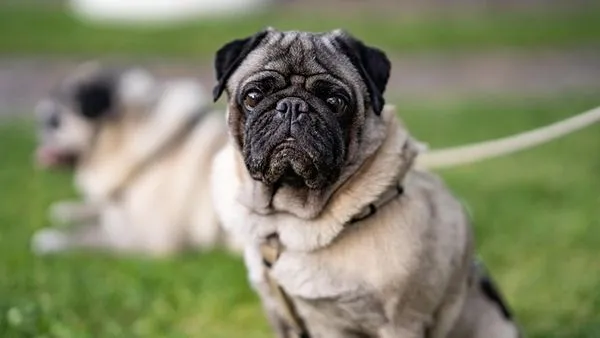
- Ignoring breed and species variance. A model trained only on Labrador retrievers will fail on pugs or mixed breeds.
- Using small, imbalanced datasets. If 90% of images are golden retrievers, the model will be biased toward them.
- Overfitting to the lab environment. Models trained in controlled clinics may fail in real homes with varied lighting, furniture, and motion blur.
- Neglecting privacy and ethics.Pet healthh data is sensitive; obtain consent, anonymize data, and comply with relevant regulations.
- Skipping post-deployment monitoring. Models degrade as environments and animal populations shift.
Actionable Tips for Reliable Pet AI Models
To maximize the chance of a successful pet AI model development project, follow these recommendations:
- Start narrow. Solve one task well—such as detecting scratching behavior—before expanding to multi-task systems.
- Involve domain experts. Veterinarians and certified animal behaviorists should validate labels and review edge cases.
- Build a diverse dataset early. Collect data from multiple breeds, ages, and environments from the first week.
- Use transfer learning. It is the single most cost-effective decision in the entire pipeline.
- Plan for edge deployment. Even if the first version runs in the cloud, design the model to be quantized later.
- Document everything. Reproducibility is essential for regulatory approval and long-term maintenance.
FAQ
How much data do I need to train a pet AI model?
For image classification with transfer learning, a practical minimum is 1,000-2,000 images per class. For behavior recognition from sensors, plan for 100+ hours of labeled data. Quality, diversity, and accurate labels matter more than raw quantity.
What is the best model architecture for pet recognition?
For image-based tasks, fine-tuned EfficientNet, ResNet, or Vision Transformer models perform best. For real-time detection, YOLOv8 is a strong default. For sensor or time-series data, use a 1D CNN or LSTM.
Can I use human pose estimation models for animals?
Yes. Tools such as DeepLabCut and SLEAP are specifically built to adapt human pose architectures to animal keypoints. Fine-tuning a human pose model can reduce your animal data requirements by 50-70%.
How accurate are pet AI models in real-world conditions?
In controlled benchmark datasets, top models exceed 90% accuracy for breed classification. In real-world conditions, accuracy typically drops to 70-85% due to motion blur, lighting variability, and occlusions. Continuous retraining with real-world data is essential to close this gap.
How much does it cost to develop a pet AI model?
A basic fine-tuned model can cost $2,000-$5,000 in compute and labeling. A production-grade system with custom data collection, domain-expert annotation, and deployment infrastructure typically ranges from $20,000 to over $100,000. Data labeling is usually the largest cost component.
Conclusion
Pet AI model development is a disciplined process that combines domain expertise, robust data pipelines, and sound machine learning practice. Whether you are building a simple breed classifier or a full wellness monitoring system, the principles above will help you ship a reliable, trustworthy model. As pet AI solutions such as Pettuex continue to advance the field, the gap between research prototypes and everyday pet care products is narrowing—and the opportunities are substantial.