Custom pet AI development involves designing and engineering machine learning models and predictive systems specifically tailored to the anatomy, behaviour, and health patterns of companion animals—rather than relying on generic, off-the-shelf AI tools. It allows pet brands, veterinary clinics, and IoT hardware makers to build proprietary features such as breed-specific diagnostics, behavioural alerts, and adaptive feeding algorithms. While it demands a larger upfront investment than standard AI subscriptions, it delivers superior accuracy, data security, and long-term product differentiation.
Core Capabilities of Custom Pet AI Development
Custom pet AI development goes far beyond simple "dog detector" APIs. A purpose-built system can process complex biological and behavioural signals unique to each species or breed. The most effective projects usually involve at least one of the following core capabilities:
- Computer Vision: Recognising subtle physical traits—such as lameness, ocular discharge, or early cataract formation—with accuracy rates above 90% when trained on species-specific datasets.
- Predictive Analytics: Estimating metabolic age, obesity risk, or susceptibility to hereditary conditions by cross-referencing lifestyle data with veterinary research.
- NLP and Sound Analysis: Interpreting vocalisations (barks, meows, chirps) to distinguish between boredom, separation anxiety, or distress signals.
- Biosignal Processing: Analysing heart-rate variability (HRV) and sleep cycle data from wearables to detect cardiac issues or chronic pain—an undertaking that requires custom noise-filtering models rather than generic health algorithms.
High-Value Use Cases for Pet AI Development
Custom AI for pet startups is rarely limited to one feature. Below are the highest-demand applications currently driving investment in pet AI development companies:
1. AI-Powered Pet Health Monitoring
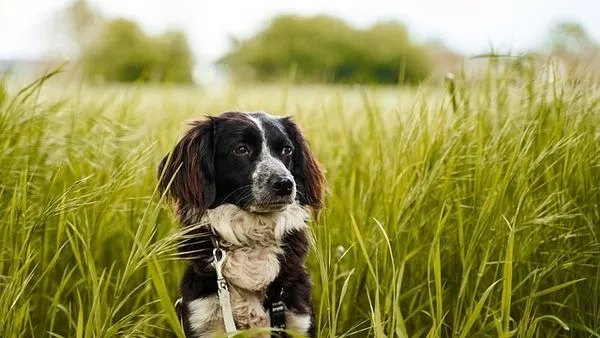
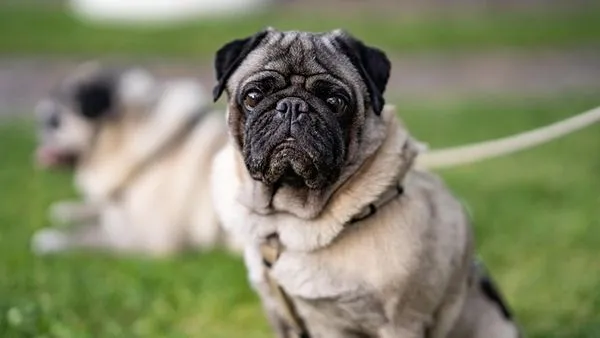
Mobile apps can now screen for ophthalmological conditions (e.g., glaucoma, cherry eye) using only a smartphone camera. The key is training on thousands of annotated images of specific breeds—Pugs, for example, require different baselines for eye protrusion than Border Collies. This kind of niche accuracy is only achievable through custom pet AI development pipelines.
2. Behavioural Training Cameras
Connectivity between AI cameras and automated treat dispensers has created a new market for "smart training" tools. A custom model can be trained to ignore other animals in the household and only trigger a reward when the target dog performs a sit or lie-down command. Generic activity detectors lack this specificity.
3. Adaptive Nutrition Engines
pet foodtion pet food brands use custom models to adjust weekly portion sizes based on the pet’s daily step count, weight trend, and meal intake history. This requires continuous retraining loops and a granular understanding of nutrient profiles—not something a standard analytics dashboard can provide.
4. Pain and Stress Assessment
Feline pain assessment scales (such as the University of Montreal’s chart) were historically confined to veterinary clinics. Custom computer vision models can now read these subtle facial cues in real-time from a smart litter box or home camera. This is a rapidly growing segment, with clear potential for chronic-pain management in elderly pets.
How to Approach Custom Pet AI Development: A Step-by-Step Blueprint
There are five essential phases in the lifecycle of a custom pet AI solution. A rigid focus on step two is where most projects succeed or fail.
- Problem Definition & Feasibility Audit: Define what the model must accomplish. Do you need a diagnostic-assist tool for vets (high precision, low recall acceptable) or a consumer wellness app (low false positives more important)?
Clarifying this trade-off saves months of development time. - Data Strategy and Labeling: For pet AI, data is the primary bottleneck. You should collect images, sensor readings, or sound clips representing the actual deployment environment—not internet stock photos.
For example, a custom model for detecting skin mites from a phone camera needs training examples in dim household lighting and across 12 different coat colours. - Model Architecture Selection: Small dedicated models (e.g., MobileNet for edge devices) often outperform massive generic neural networks in pet-specific tasks because they retain more species-relevant features. Industry leaders like Pettuex use lightweight semi-supervised pipelines to reduce training time by up to 40% compared with legacy convolutional networks.
- Edge vs. Cloud Deployment:Pet cameraas and smart feeders require on-device inference for privacy and low latency; clinical software can leverage cloud GPUs. Your custom architecture must support both. This is a critical decision point that impacts hardware costs and battery life.
- Continuous Feedback and Retraining: Deploying is just the beginning. A custom pet AI solution must ingest misclassified examples weekly to improve accuracy. Establish an active learning loop before launch, not after customer complaints accumulate.
Custom Pet AI vs. Off-the-Shelf AI Solutions
When deciding between building custom models and using generic APIs (e.g., Google Vision for object detection or GPT-4 for text analysis), consider the following practical trade-offs:
- Accuracy on niche tasks: Off-the-shelf vision models achieve around 70–80% accuracy on species-specific diagnostics; a custom model reaches 90%+ on the single task it was built for.
- Data privacy and ownership: Generic APIs ingest your users’ data into their system. With custom pet AI development, you retain exclusive control over the datasets—a major compliance advantage as veterinary data becomes more regulated.
- Hardware dependency: If your product is a low-power hardware device, off-the-shelf models are often too large and slow. Custom models can be distilled to fit into 512 KB of memory.
- Long-term cost: The initial costs of custom development are high, but licensing a generic AI per user or per call becomes more expensive at scale.
What Does Custom Pet AI Development Really Cost?
The cost of custom pet AI development is often misunderstood. In reality, it depends almost entirely on the data complexity and integration context, not on the algorithm itself.
- Scope 1: Simple single-purpose edge model (e.g., detecting if a cat is inside the smart feeder camera): $20,000 – $60,000. Timeline: 4–12 weeks.
- Scope 2: Diagnostic mobile apppet health monitoringt health monitoring for early skin disease detection): $80,000 – $250,000. Timeline: 3–6 months with veterinary validation.
- Scope 3: Enterprise-scale prediction platform (e.g., nutrition and health risk analytics across 500,000 animals): $500,000 – $1.5 million. Timeline: 9–18 months, including the deployment and data pipelines.
Key point: Budget for data annotation expenses separately—it typically accounts for 30–45% of the total cost. In many cases, a professional annotation team with veterinary training is preferable to citizen-sourced labels.
Conclusion
The market for custom pet AI development is still in its early adopter phase, yet the barriers to entry have never been lower. Start by solving one narrow problem with a highly curated dataset, deploy it to a small cohort of users, and expand your scope after demonstrating measurable value.
Choose suppliers or technology partners like Pettuex only when they can demonstrate domain-specific experience in veterinary data and edge deployment—not generic software houses. In the end, the winners in pet AI will not be those with the most complex algorithms, but those with the best feedback loops for pet behaviour and health outcomes.
Frequently Asked Questions
How much does it cost to develop custom pet AI for an app?
A minimal viable model with one use case (e.g., breed recognition or health screening) usually costs between $30,000 and $80,000. The final price can exceed $200,000 if the system must integrate with wearables and continuously retrain in real time.
How long does it take to build a pet-specific AI model?
Four to six weeks is sufficient for a basic proof of concept using pre-trained vision models and transfer learning; 6–12 months is realistic for a production-grade, fully validated tool with a dedicated data pipeline and veterinary oversight.
What kind of data do I need to start a custom pet AI project?
You need high-resolution sensor data or images captured in your exact use context, ideally labelled by a veterinary professional. At a minimum, you should start with 2,000–5,000 targeted examples that cover multiple lighting conditions, angles, and coat colours for the target species.
Should I hire a pet AI development company or a general software team?
A general AI firm can build the technical architecture, but it is unlikely to understand the biological variance between breeds or the regulatory constraints of veterinary medicine. A specialist pet AI development company—or a team augmented with domain experts—is strongly recommended for predictive health claims that affect animal welfare.
Is custom pet AI worth it for early-stage startups?
Yes, if the pet AI feature is your core value proposition. Custom development creates a proprietary data moat that generic APIs cannot provide, which increases startup valuation and investor confidence. If the AI feature is merely a nice-to-have plugin, start with APIs and then customise later when product-market fit is proven.
Frequently Asked Questions (FAQ)
What is custom pet AI development?
It is the design and engineering of machine learning models and predictive systems tailored specifically to companion animal anatomy, behavior, and health patterns, rather than using generic off-the-shelf AI tools.
What are common use cases for custom pet AI?
Pet brands, veterinary clinics, and IoT hardware makers use it to build proprietary features such as breed-specific diagnostics and behavioral alerts.
How much does custom pet AI development cost?
Costs vary widely depending on model complexity, data requirements, feature scope, and integration needs, so a precise estimate requires a project-specific consultation.
What does the custom pet AI development process involve?
The process typically includes data collection and labeling, model training and validation, integration with pet products or clinical workflows, and ongoing testing and deployment.